RESEARCH
Elucidation of biogeochemical dynamics in nature and integrated understanding of the hydrosphere, geosphere, and biosphere
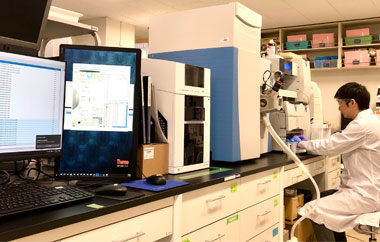
Focusing on naturally occurring materials (elements, isotopes, compounds, etc.) that form the foundation of the Earth system, we advance research and development to solve unresolved questions regarding their origin, composition, distribution, interactions, and the factors driving their spatiotemporal variations. In particular, we will conduct fundamental description of materials science in marine and terrestrial areas, along with multiple observations related to Earth and planetary sciences, to understand and predict future material dynamics. Furthermore, we will contribute to the systematization of an integrated understanding of the hydrosphere, geosphere, and biosphere, including the estimation of resource distribution and environmental impacts in collaboration with domestic and international research communities.
Elucidation of formation mechanisms of submarine resource and research and development for sustainable utilization
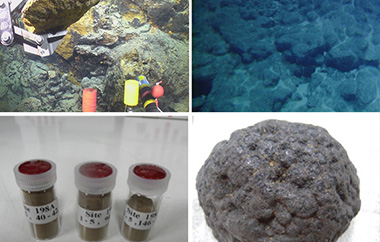
We aim to elucidate the formation mechanisms of submarine resources that exist in diverse compositions and forms, including mineral resources and energy resources. By taking advantage of JAMSTEC’s state-of-the-art technologies—such as geophysical exploration, physical property measurements, and various chemical analyses—we will investigate the functions of target materials and advance research and development, including the estimation of the distribution of submarine resources. Furthermore, the advanced and interdisciplinary insights and fundamental data obtained through our research will be shared with domestic and international research communities, contributing to efforts to promote the utilization of useful material functions and to address social issues.
Understanding the Dynamics of Environmental Pollutants and Developing Low-Impact Materials
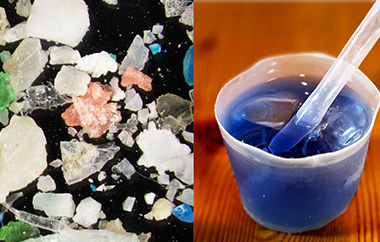
Focusing on anthropogenic pollutants (such as microplastics) that are widely found in the ocean and impact the environment, we advance research and development aimed at clarifying their dynamics and environmental impacts. In parallel, we promote research and development that contribute to addressing the social challenge of mitigating marine pollution through the development of novel materials with low environmental impact. Through these efforts, we aim to better understand the dynamics of marine pollutants and build a more sustainable society.