







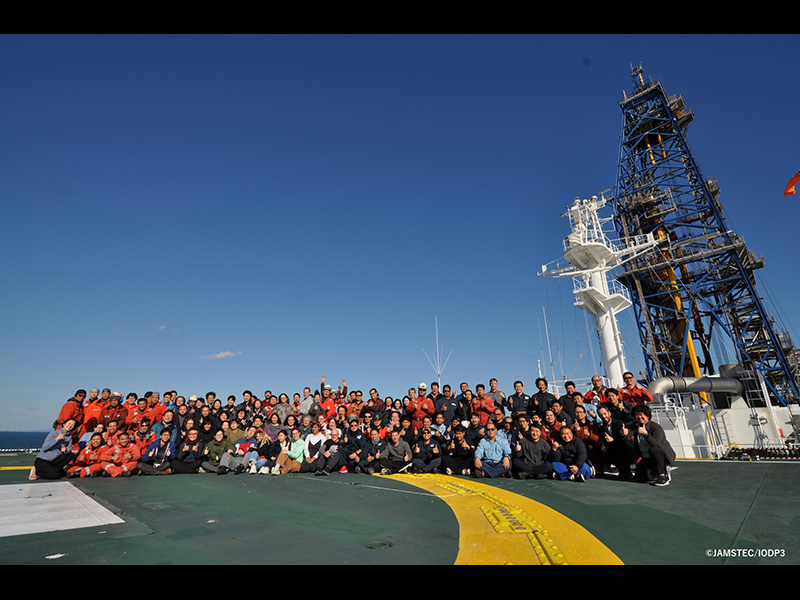
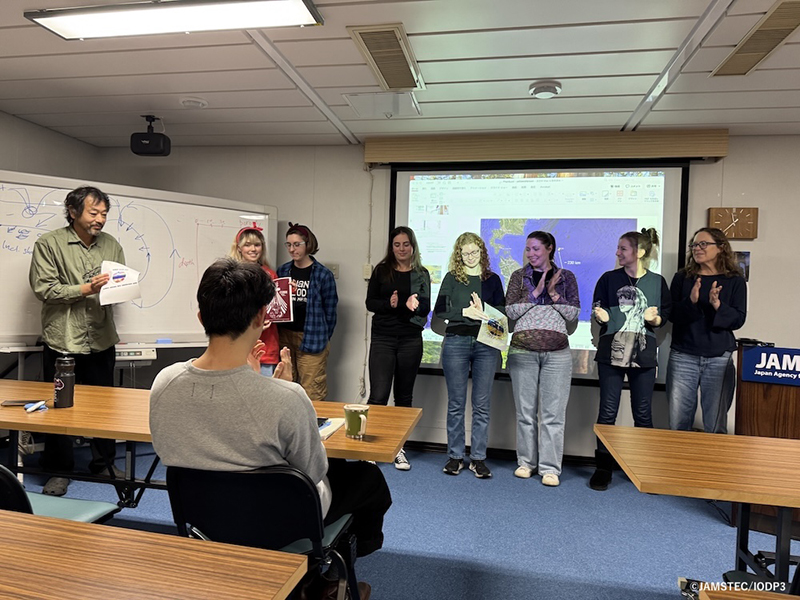
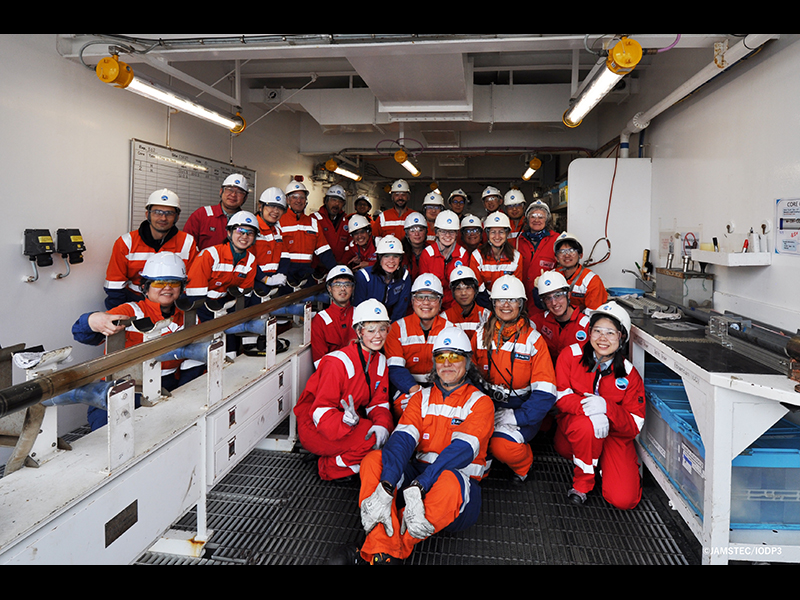
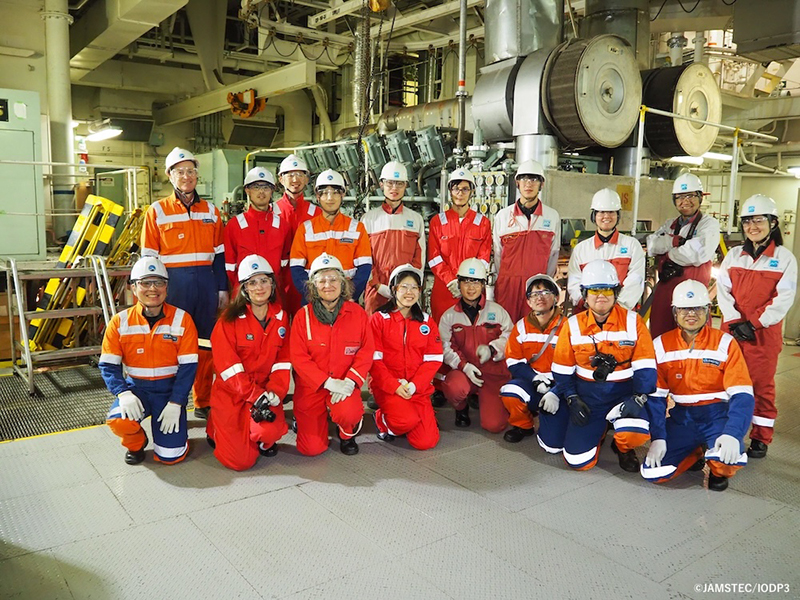
Arrived at Sendai Port. The expedition ended safely! Finally, we took a commemorative photo with the scientists & crew on board.
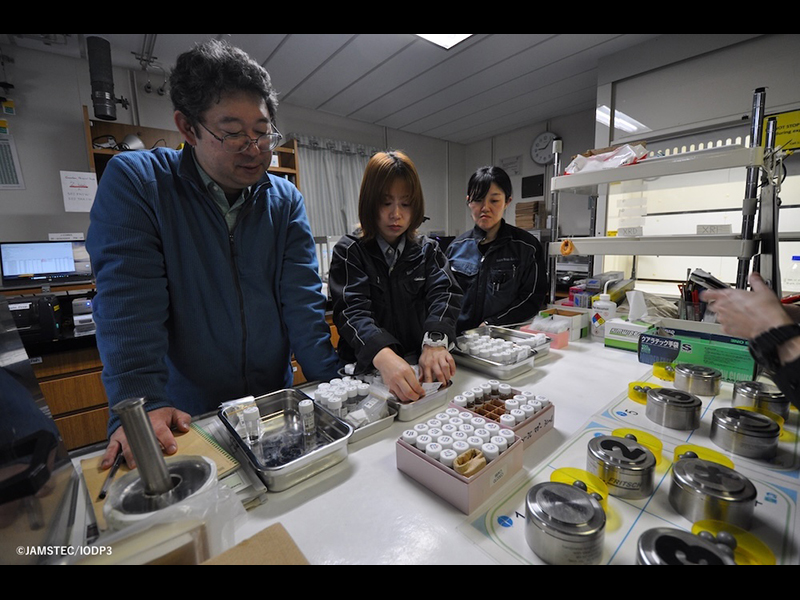
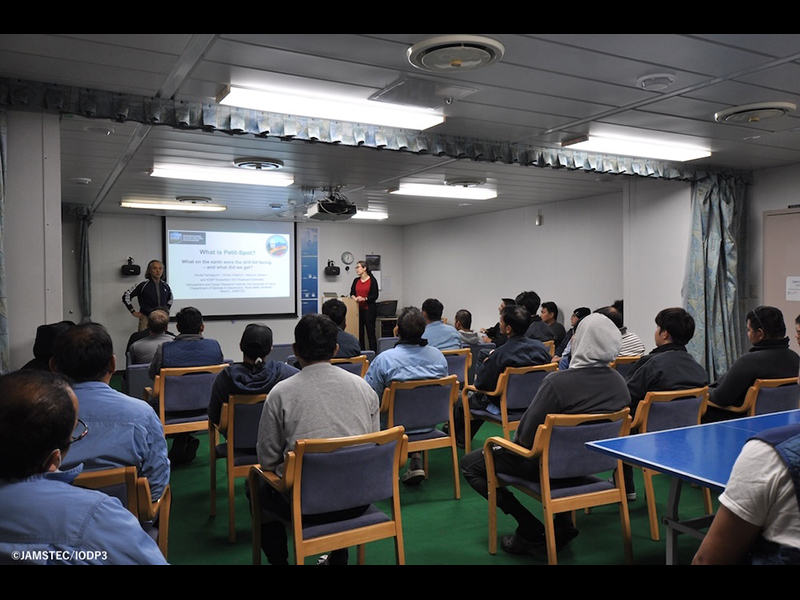
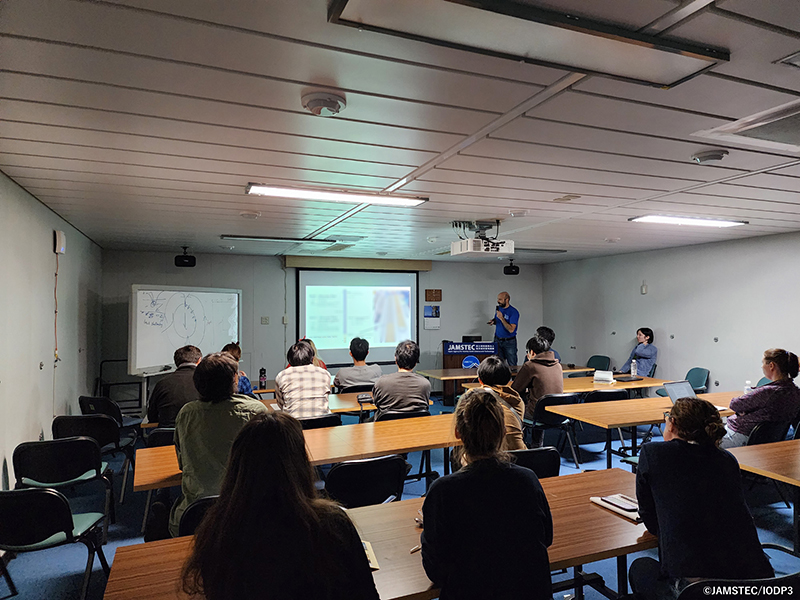
Chikyu anchored off Sendai's coast on 22 Nov. Scientist were happy to see land for the 1st time in 3 weeks. The lab has started packing up & preparing for the next expedition. The co-chief scientists held an easy-to-understand seminar for the crew & was a big hit!
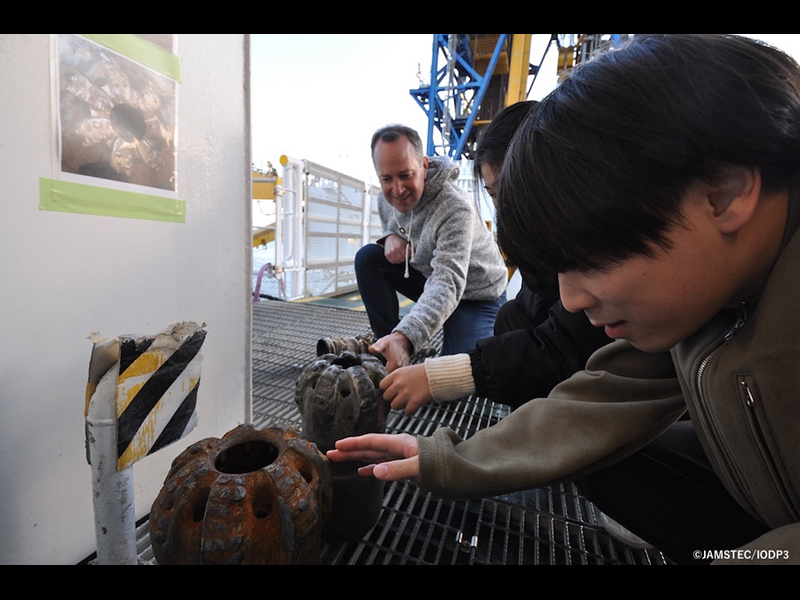
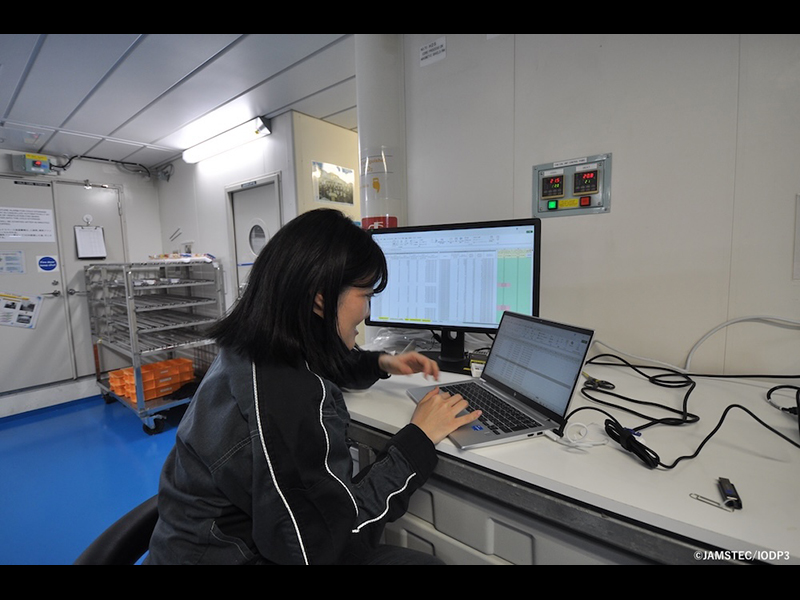
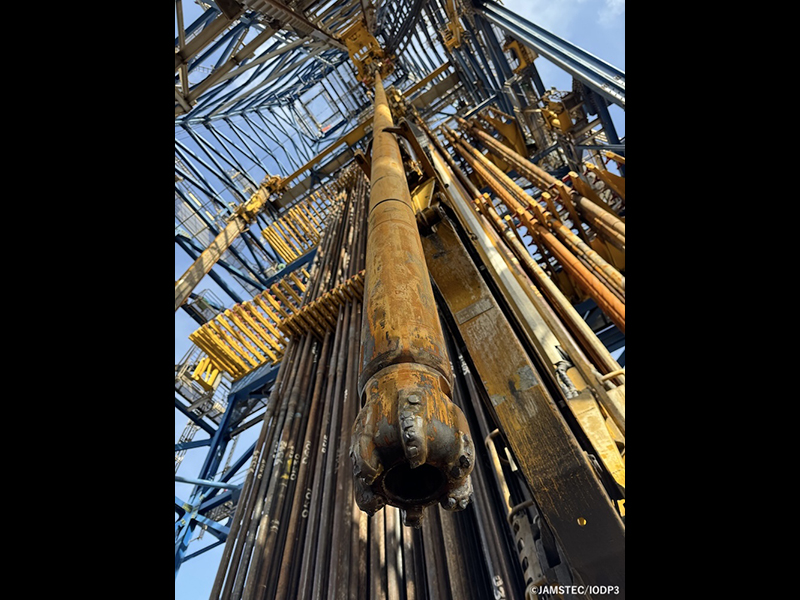
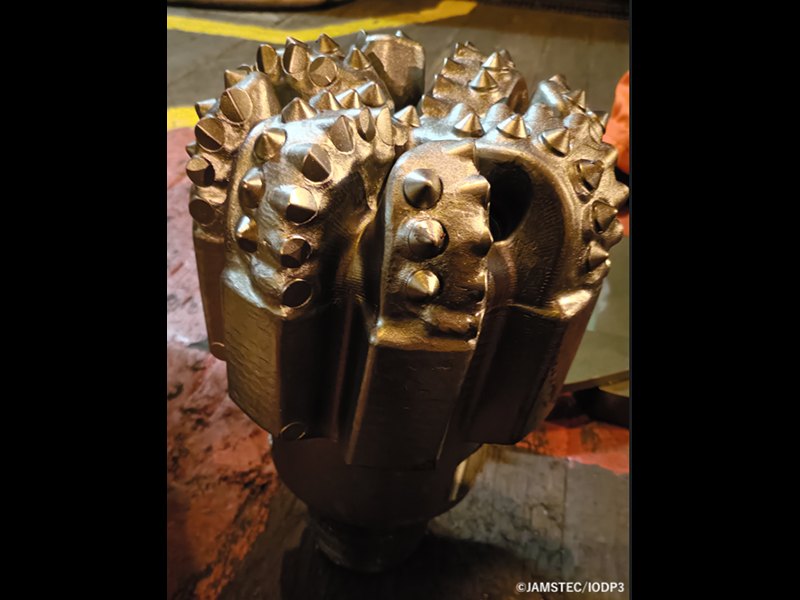
Chikyu began moving to the coast of Sendai. The core bit used was quite bulky & is now completely worn & looks like it was struggling against the target rocks. A scientist examines the bit (photo). In the lab, scientists review the reports & data.
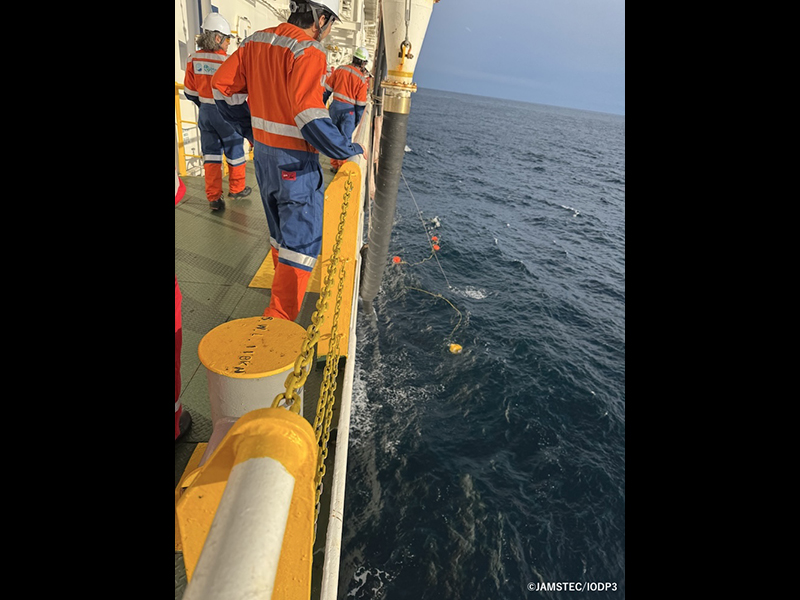
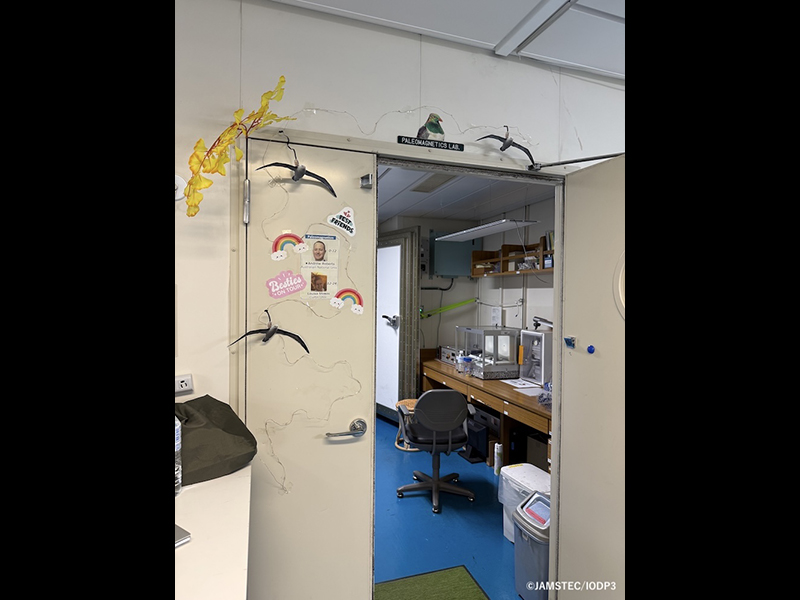
Coring has been successfully completed, & the crew are currently working on retrieving the transponders. As the expedition draws to a close, we see the decorations Louisa (paleomagnetism group) has set up in the paleomagnetism room to liven up the lab!
【Part 1】
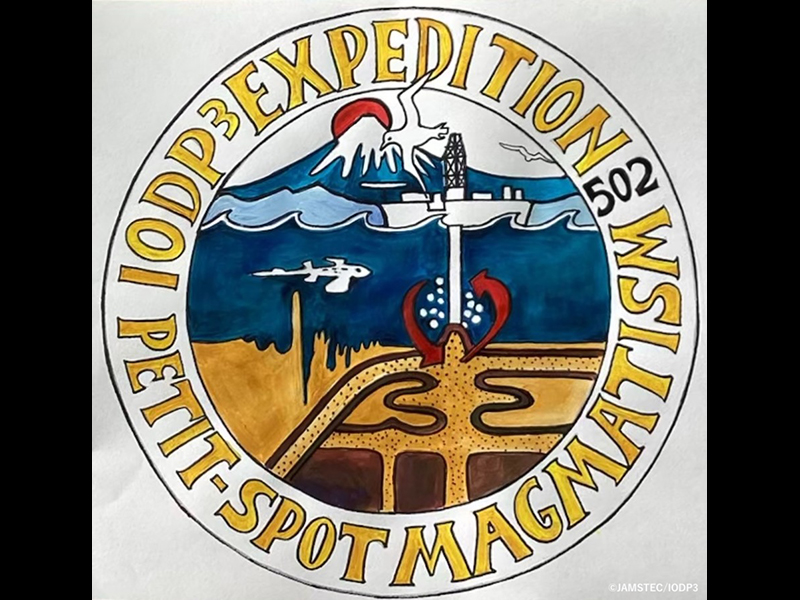
Coring resumed. In the lab, Francesco, (geochemistry specialist), gathers scientists to discuss ways to deepen our understanding of the core samples obtained during this voyage. D/V Chikyu also held its expedition logo contest! Check out the winning design here!
【Part 2】
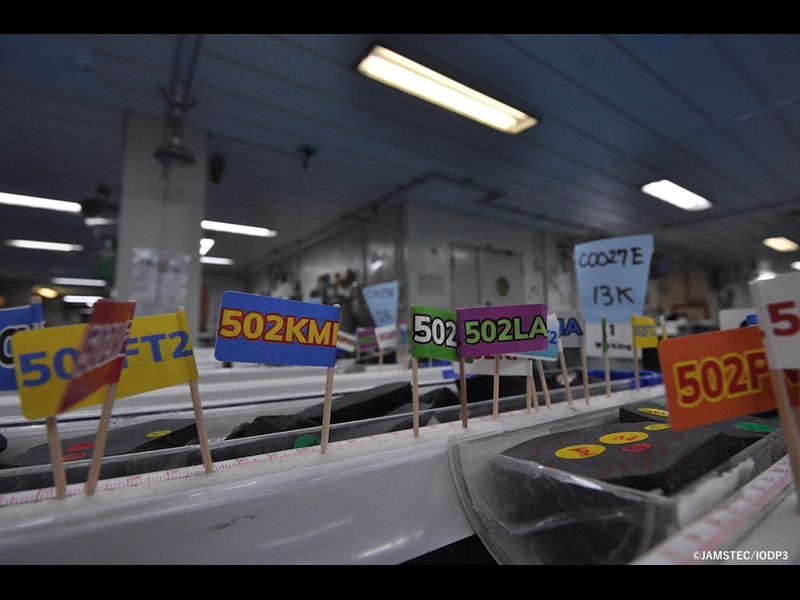
Many sampling flags lined up!
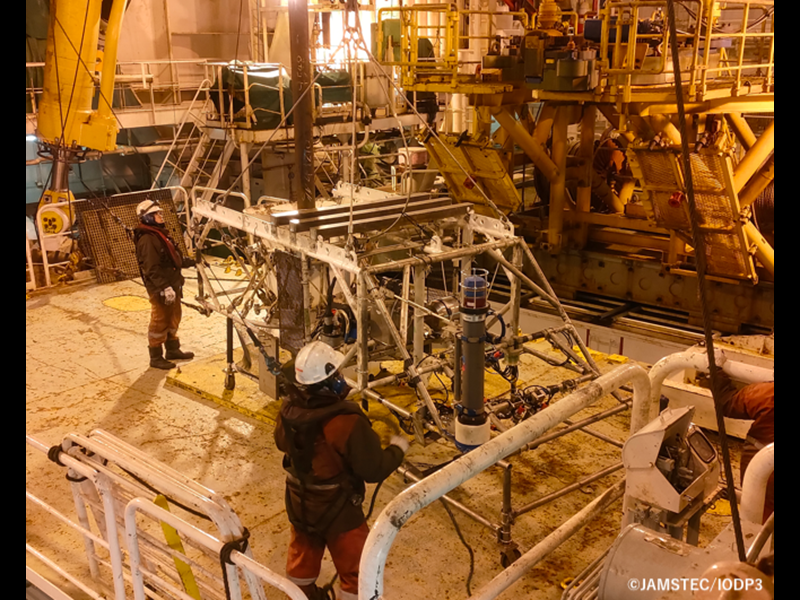
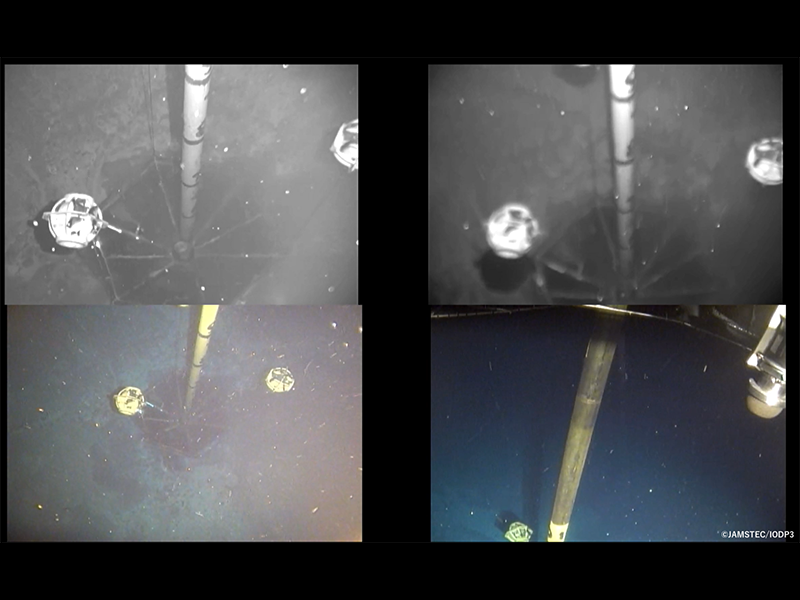
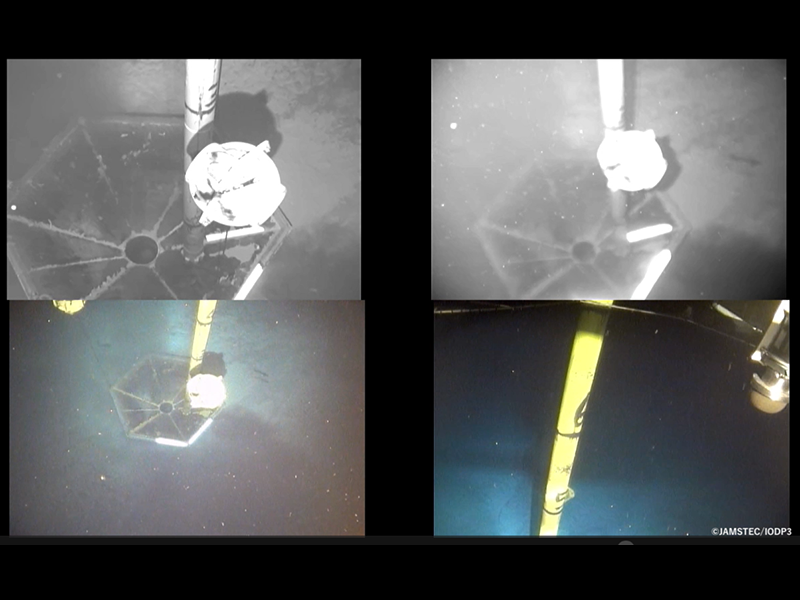
Now that the bit condition is known, the underwater camera was lowered in prep for the next coring (photo). In the lab, scientists are busy preparing reports in between core processing work.
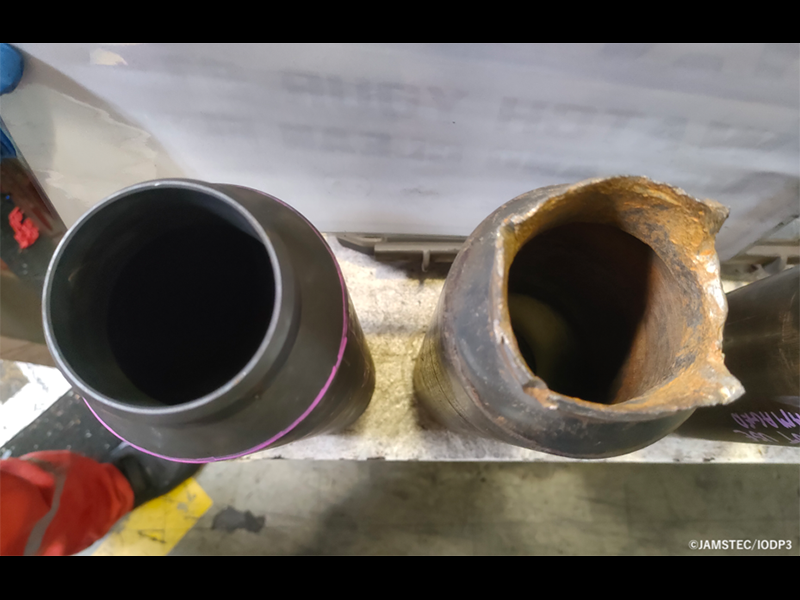
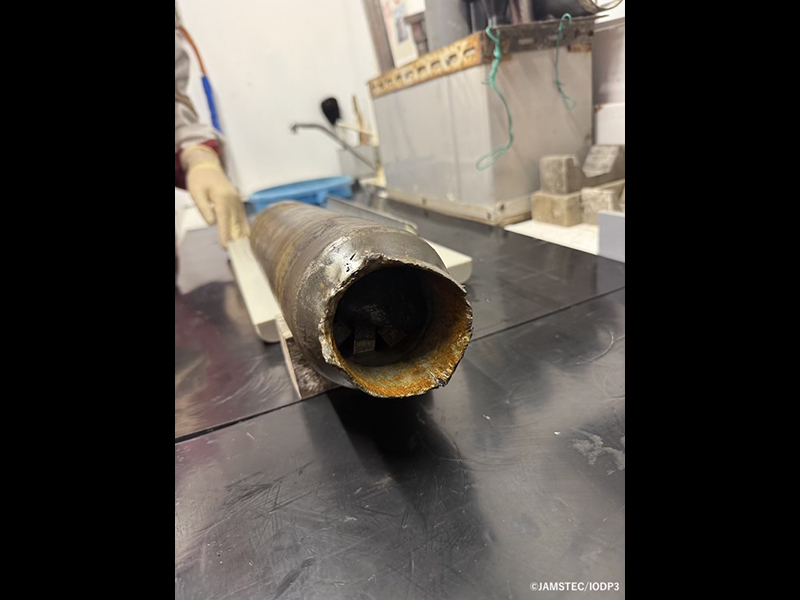
Hole conditions worsened & believed that the bit was worn out, so coring stopped. This was the last core here. Usually, the bit cuts through the stratum, but looks like the inner cutting shoe was doing this instead! This shows how hard it is to drill here.
【Part 1】
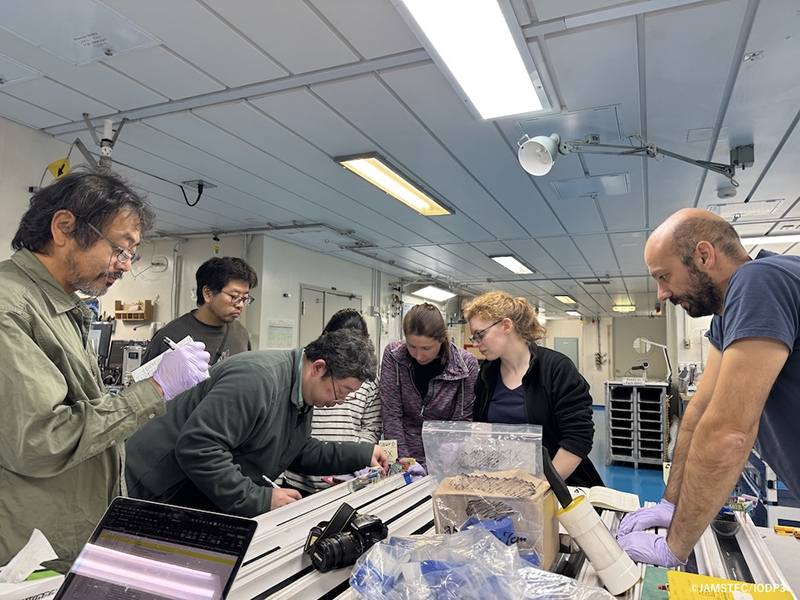
Coring resumes with a new bit! The lab continues to hold sampling parties. The cores are densely studded with flags, showing many interested scientists. The co-chief interviews scientists to confirm their intended use & adjust requests to their needs.
【Part 2】
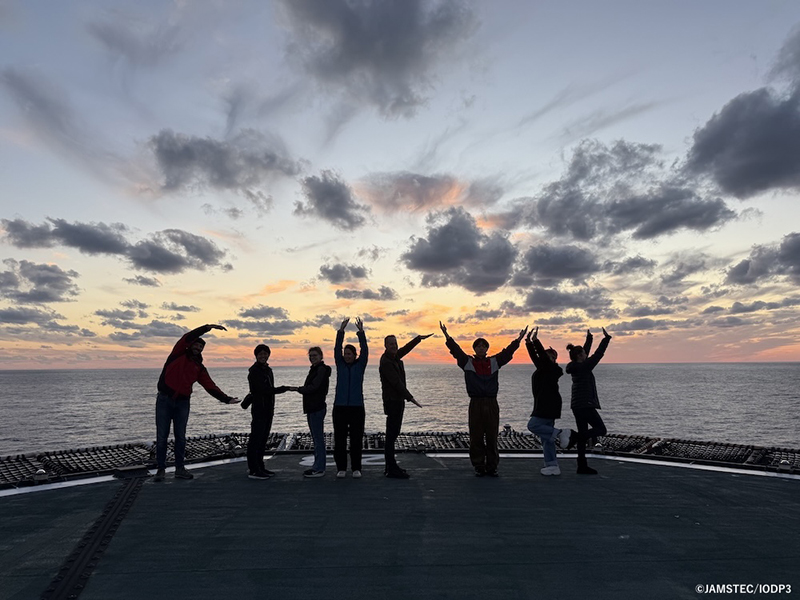
"CHIKYU" pose by dayshift scientists with beautiful sunset.
【Part 1】
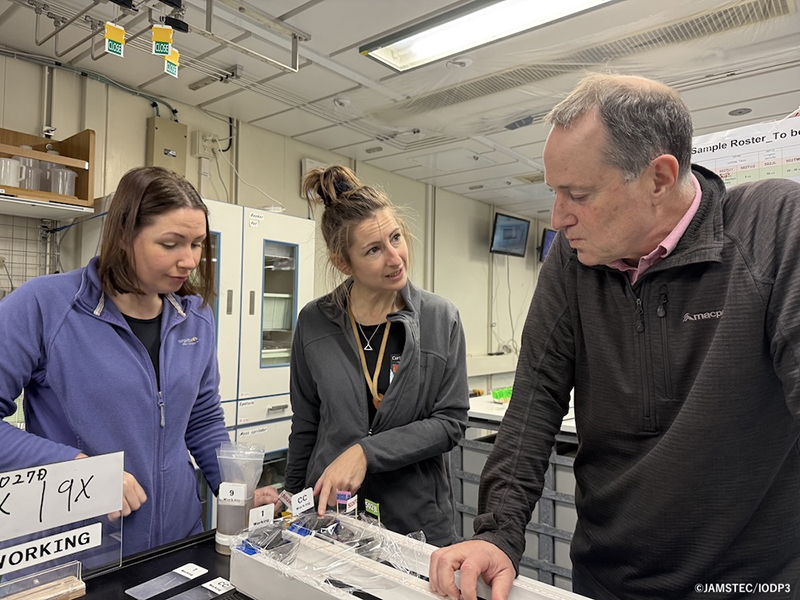
Rig crew are working on replacing the bit. In the lab, a sampling party collected the soft sediment cores from the HPCS/ESCS. Everyone flagged the sections they wanted samples from, & if there were multiple requests, were resolved through discussion.
【Part 2】
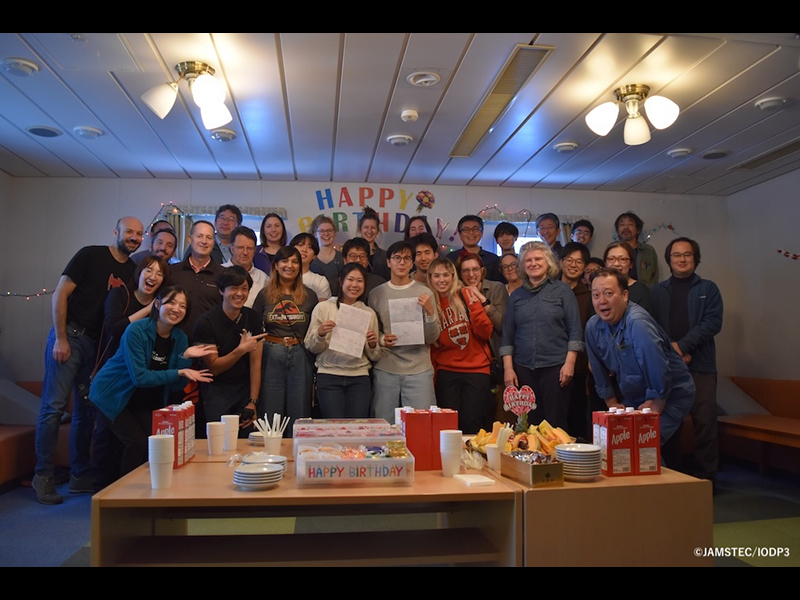
We held a November birthday party in between work! Happy birthday to everyone who had a birthday!!! MWJ made wall decorations, and the MQJ kitchen prepared decorated fruits & sweets to celebrate.
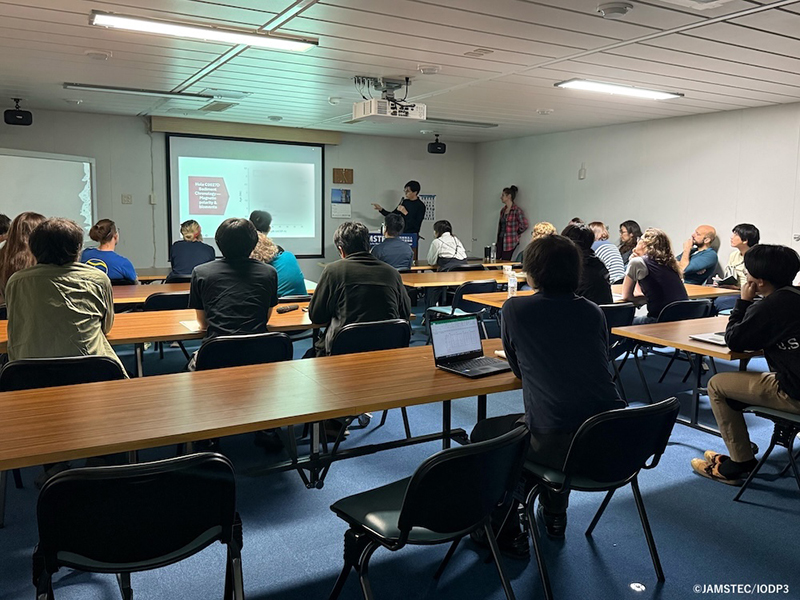
Hole conditions are good & coring is proceeding smoothly, but low recovery rates are concerning. Scientists pleased they are properly sampling the target strata. The lab also steadily progressing with sample processing & analysis. The photo shows today's work.
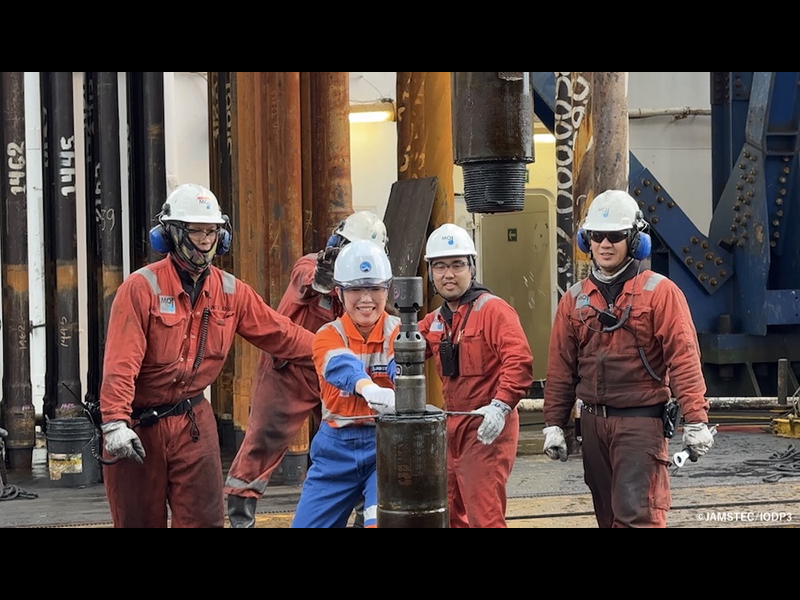
SD-RCB coring is ongoing! Co-chief Hiroko Kitajima (TAMU) was able to drop the inner coring barrel on the rig floor!
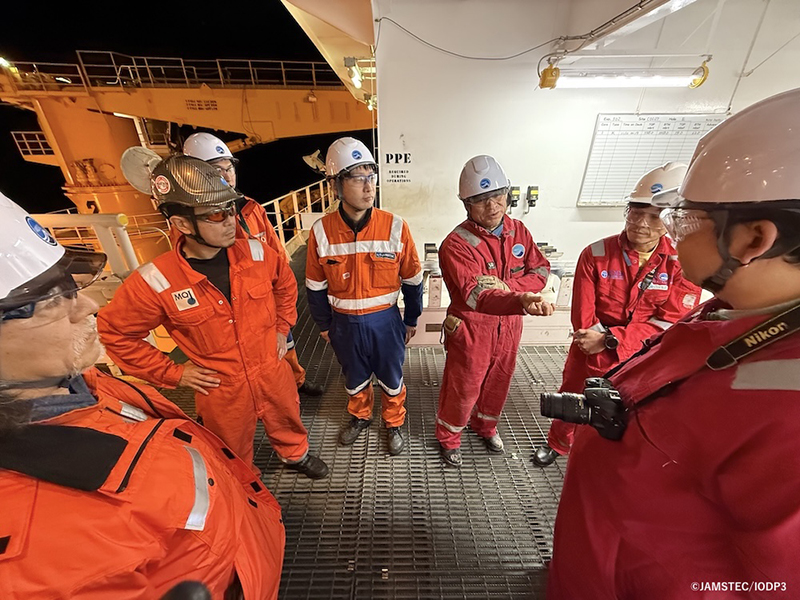
We ran SD-RCB assembly, spud-in & washed down, and started coring. Drilling team and scientists discussing the next coring plan while the 1st SD-RCB core on deck.
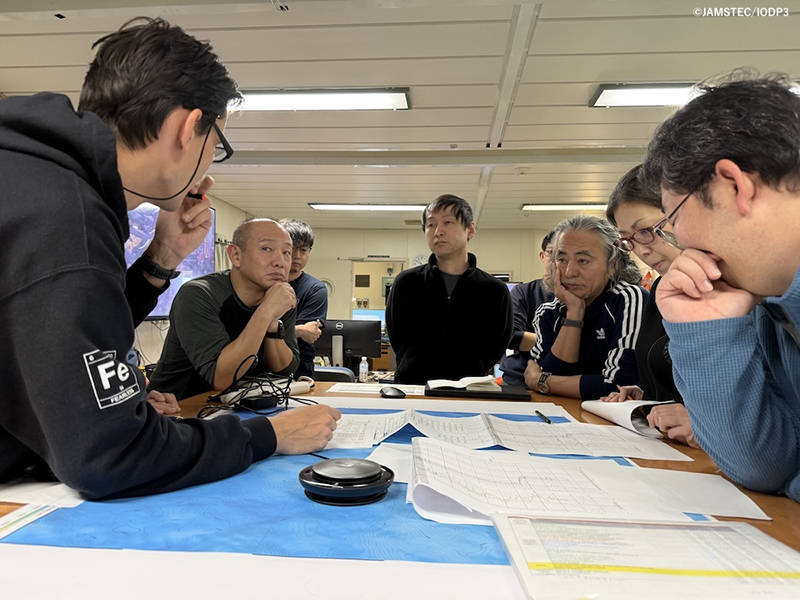
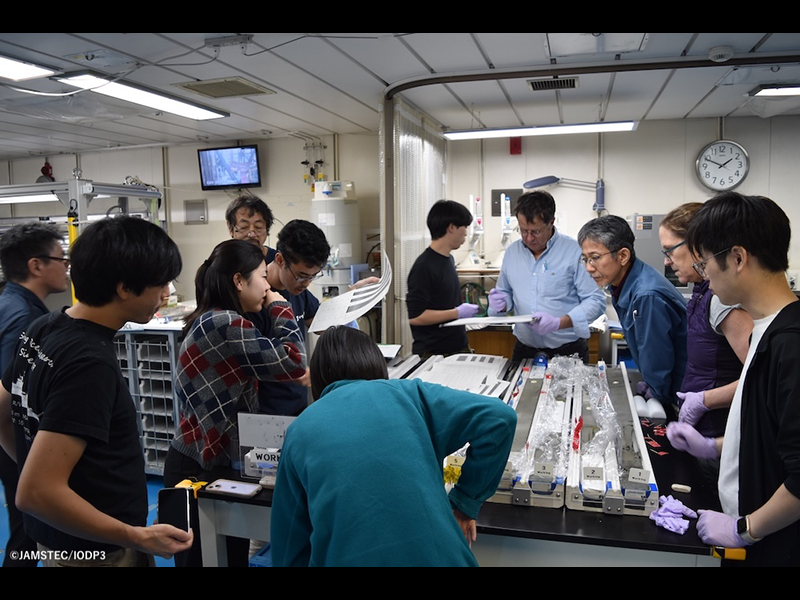
After our daily morning video conference with the Co-Chief Scientists, the drilling & support teams onshore, we discussed our future coring plans. Before noon, the day & night shift scientists handed over their work, & the area around the recording table was lively.
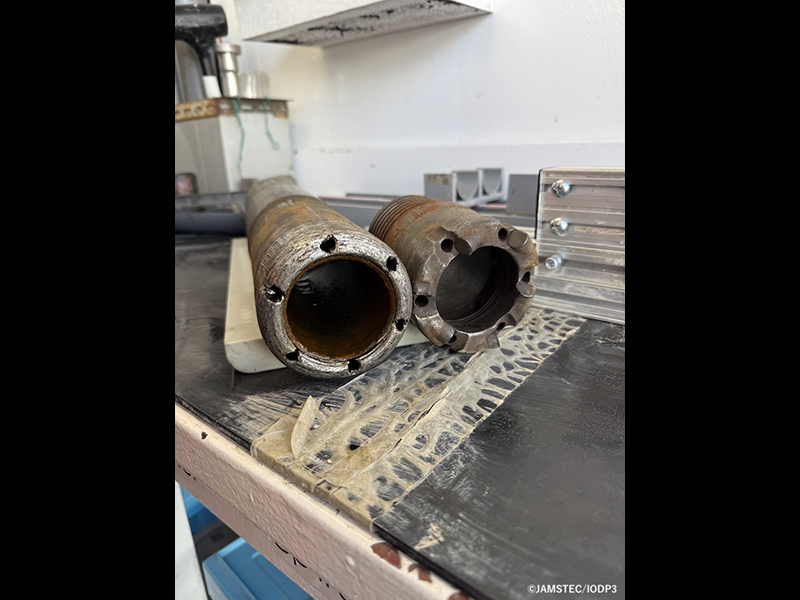
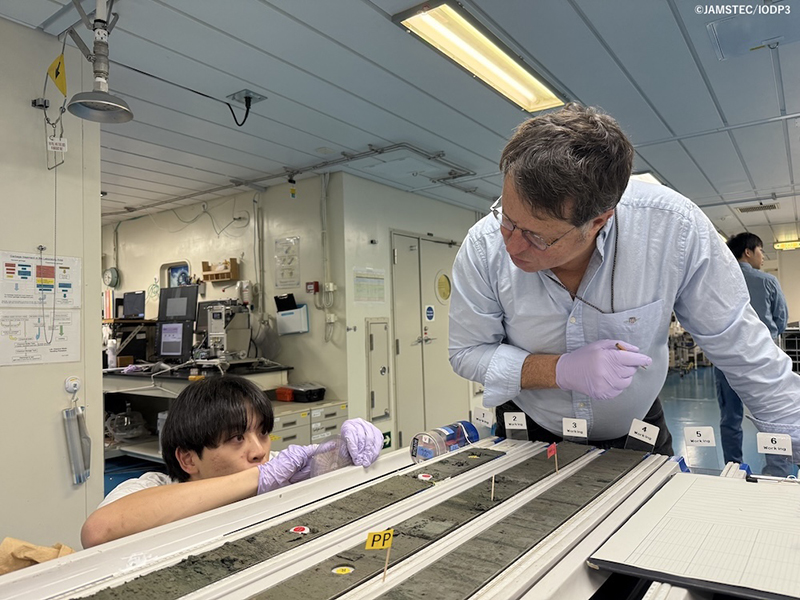
We completed HPCS/ESCS coring with exciting 9 cores from C0019D,and are currently moving on to preparation of SD-RCB coring.
L: The cutting shoe that came back completely smooth and shiny.
R: Structural geology members are working on VCD.
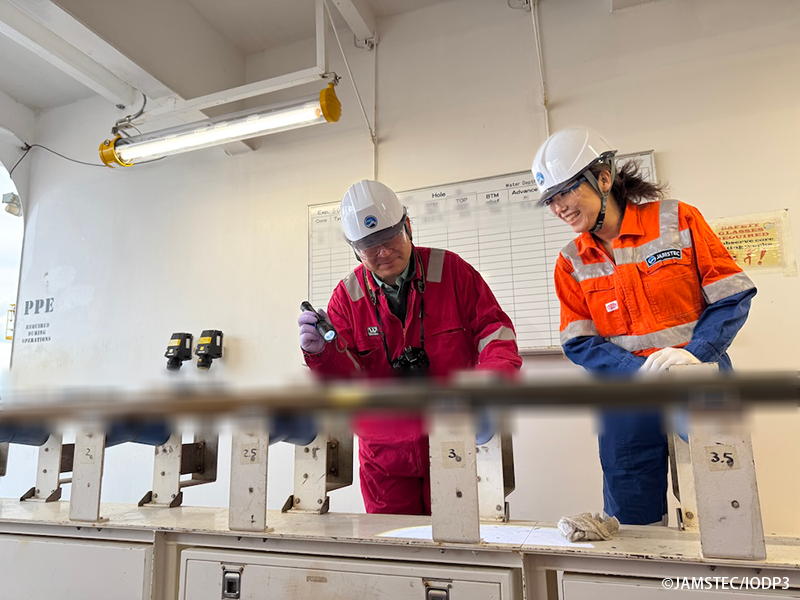
We recovered the first core of this expedition and the IODP3 expedition by Chikyu! Cores have been coming up every 2–3 hours, and the scientists are keeping busy.
We completed the logging operation and moved on to the HPCS coring.
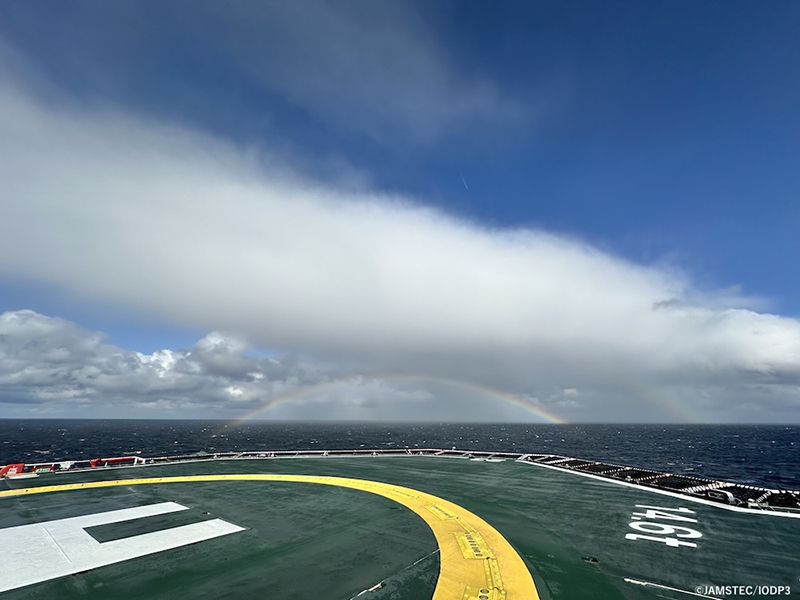
Beautiful rainbow looks like celebrating the completion of our logging operation and cheering for upcoming coring.
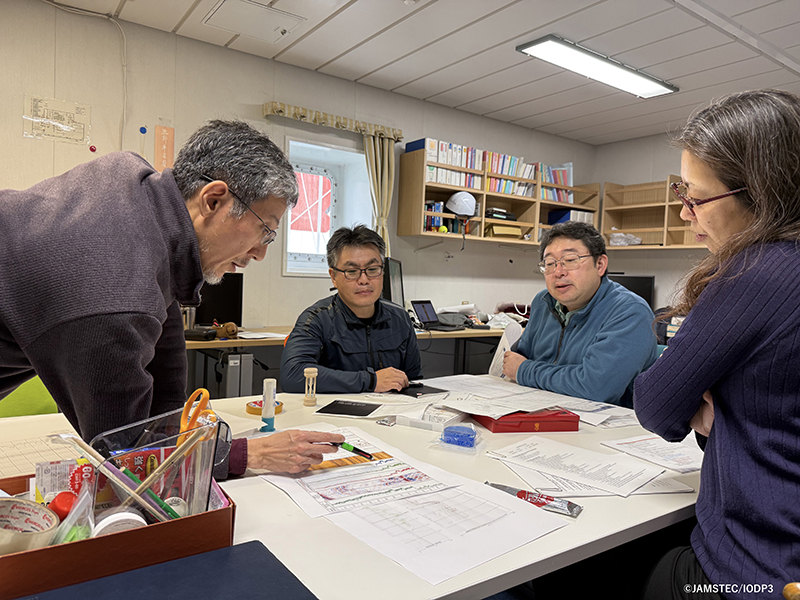
Co-chiefs and logging scientists discussing actively over the preliminary logging data. Scientists enjoyed ship tour during breaks in works.
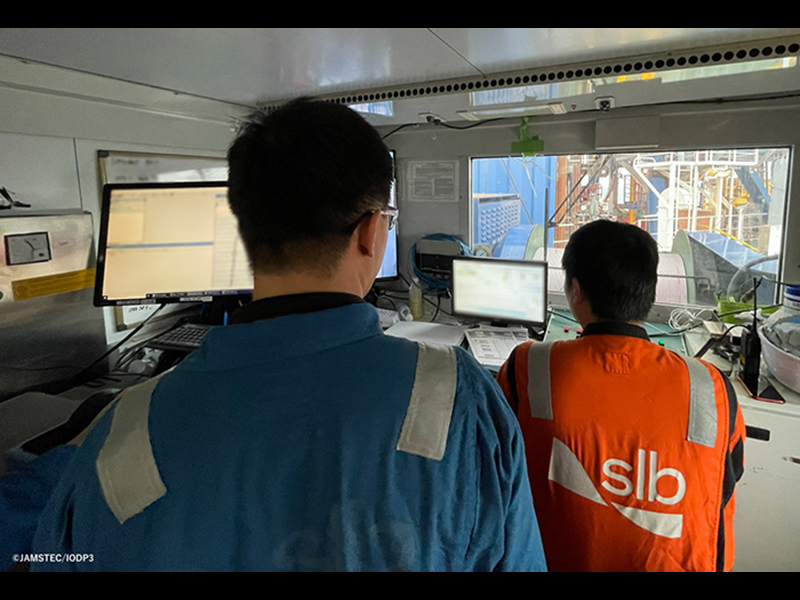
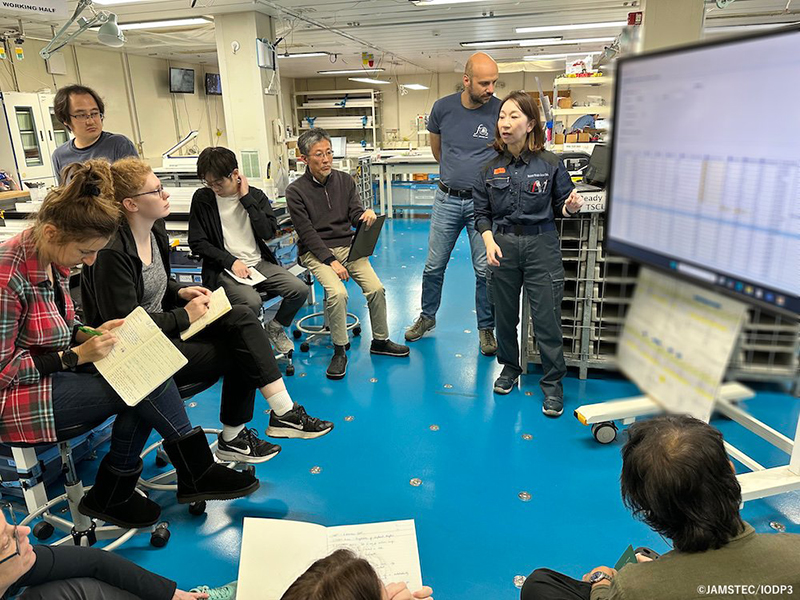
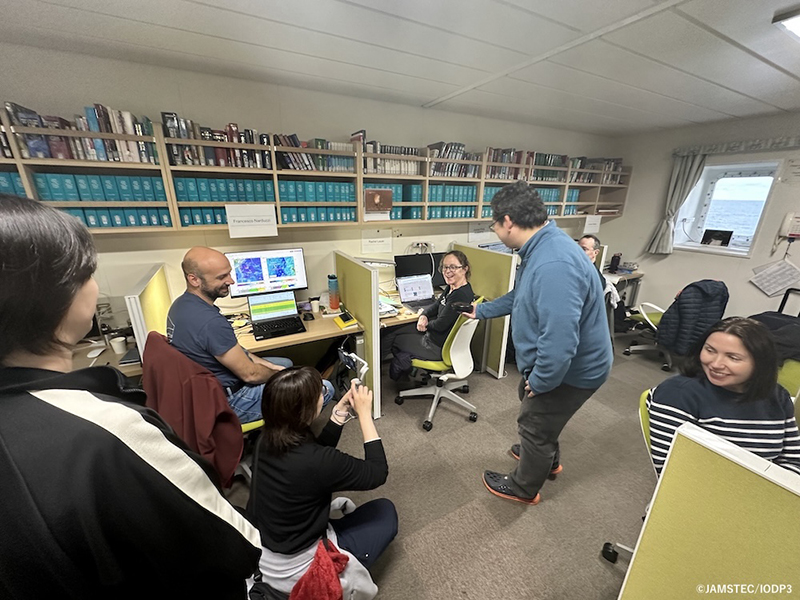
We are currently waiting to receive the "rush print" data. In the lab, day shift scientists attended a lecture about sample registration in J-CORES. We also held a live broadcast with a local Japanese high school.
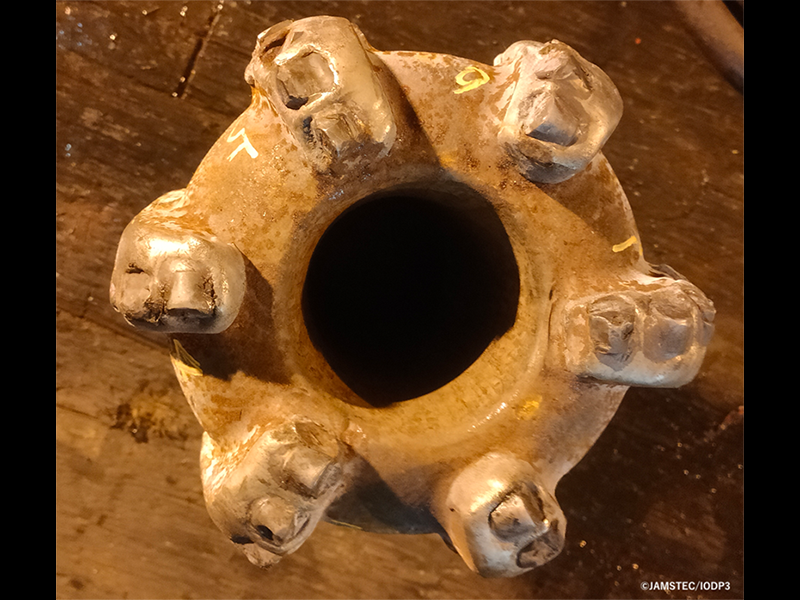
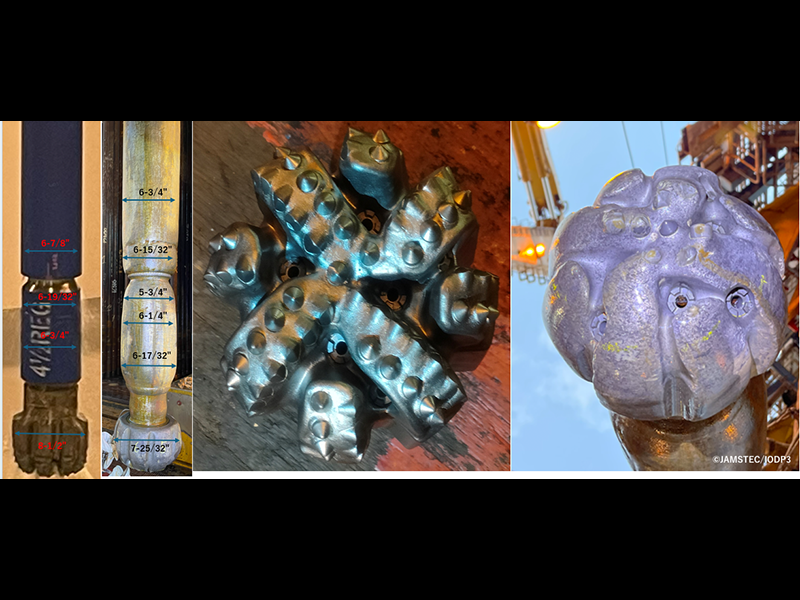
Immediately after operations began, drilling was difficult because of the poor weather conditions & the hardness of the target formation, but even so, we could make progress in the hole.
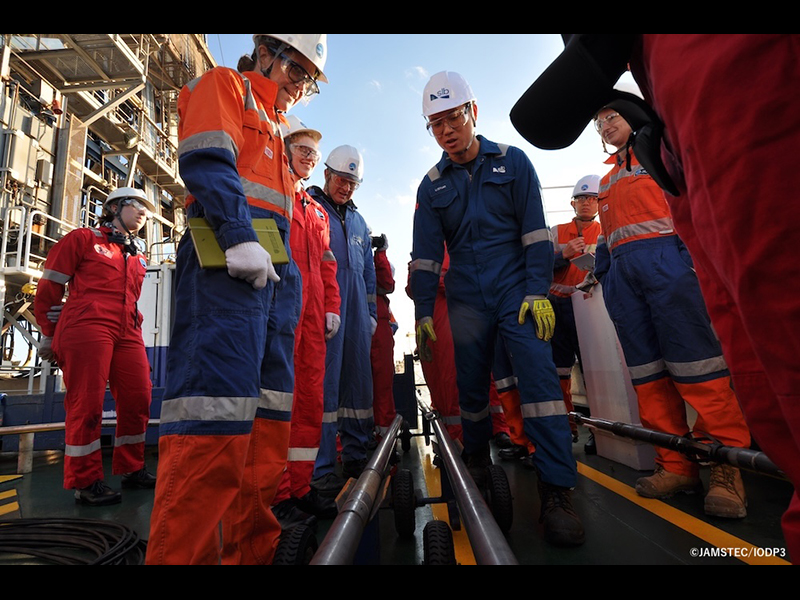
Thanks to the logging staff, Scientists could see the actual logging tools to be used & could also visit the rig floor during pipe lifting operations! Scientists crowded up the space, so were sad when asked to leave! Like herding cats!
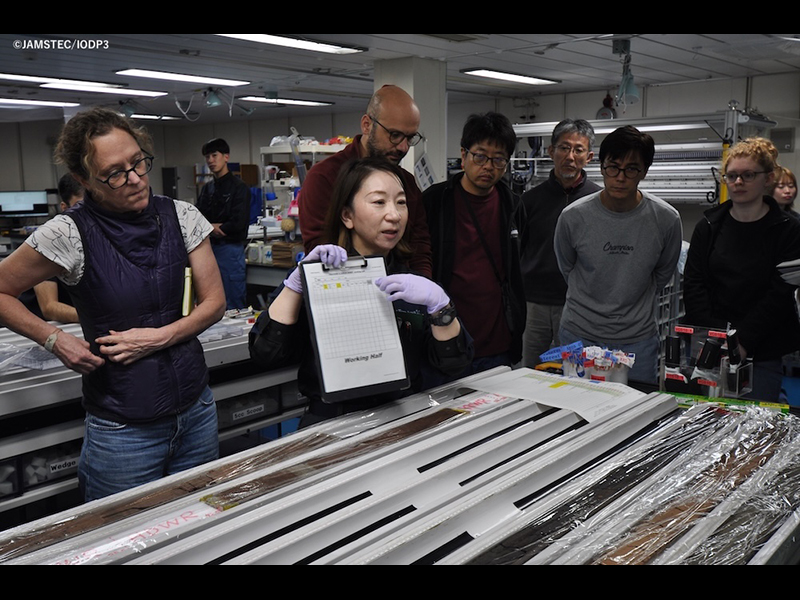
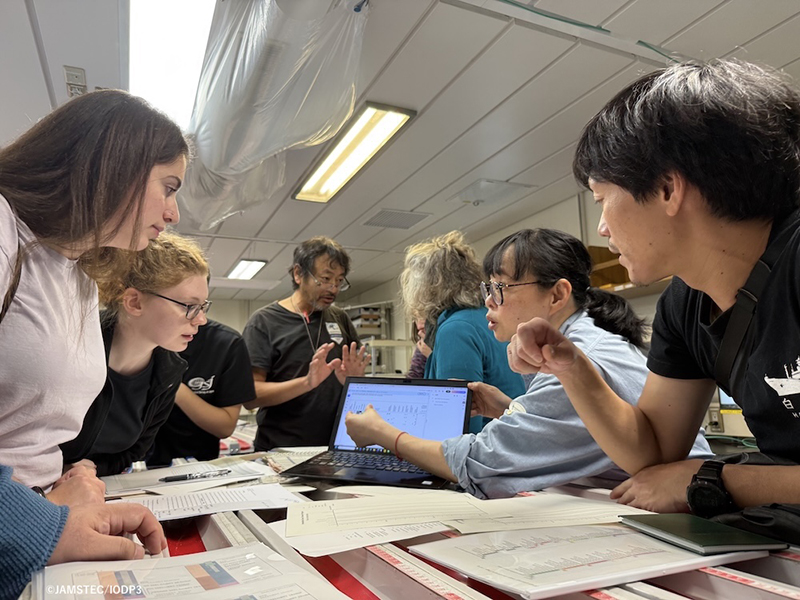
Starting today, inductions have begun in the lab. It's great to see the lab bustling with scientists! The MWJ curator gives a sampling lecture (L); The lithology team discusses the legends to use in describing cores with the naked eye (R).
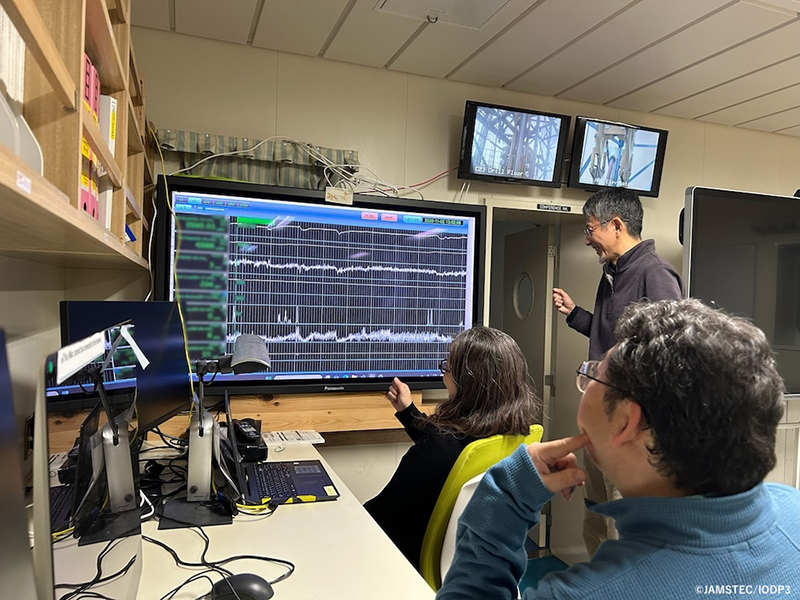
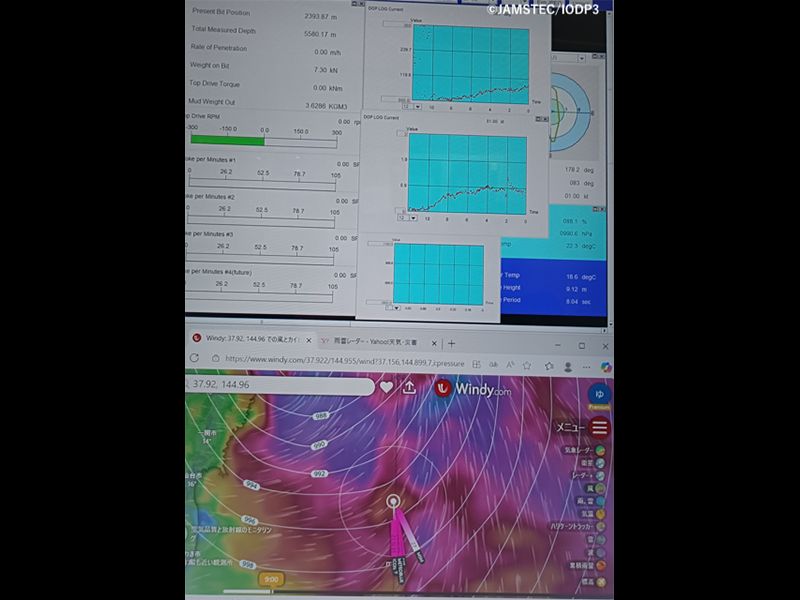
Update from the drill floor! Spudded-in at Hole C0027C, washed down to 56 mbsf & started/continued drilling to 78 mbsf. Scientists talk about their observations while monitoring the drilling parameters in real time.
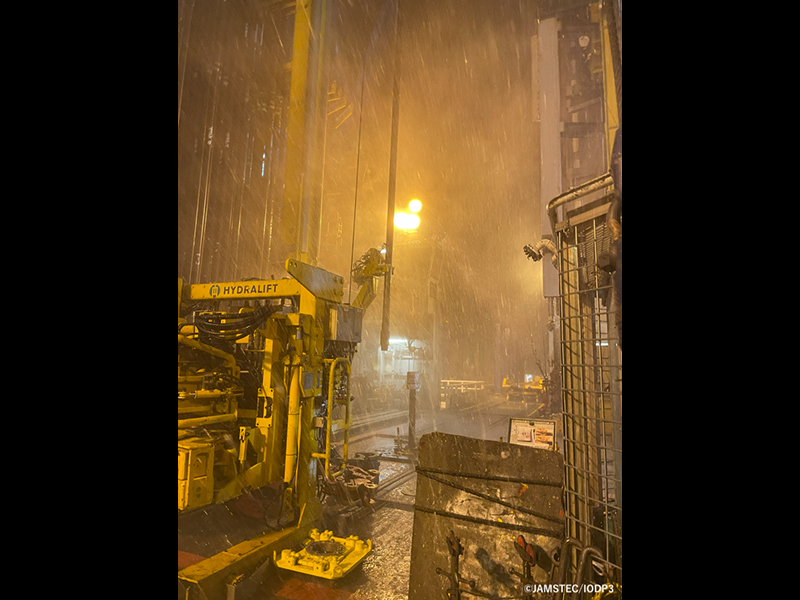
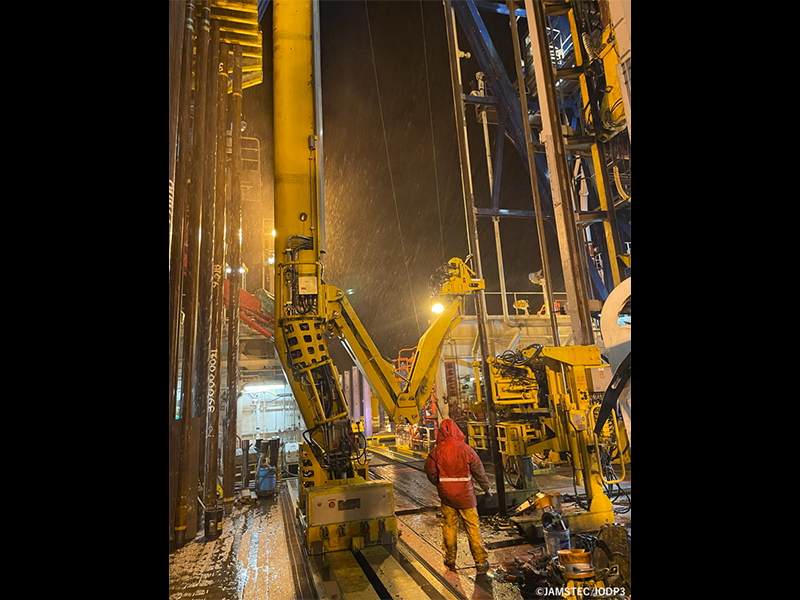
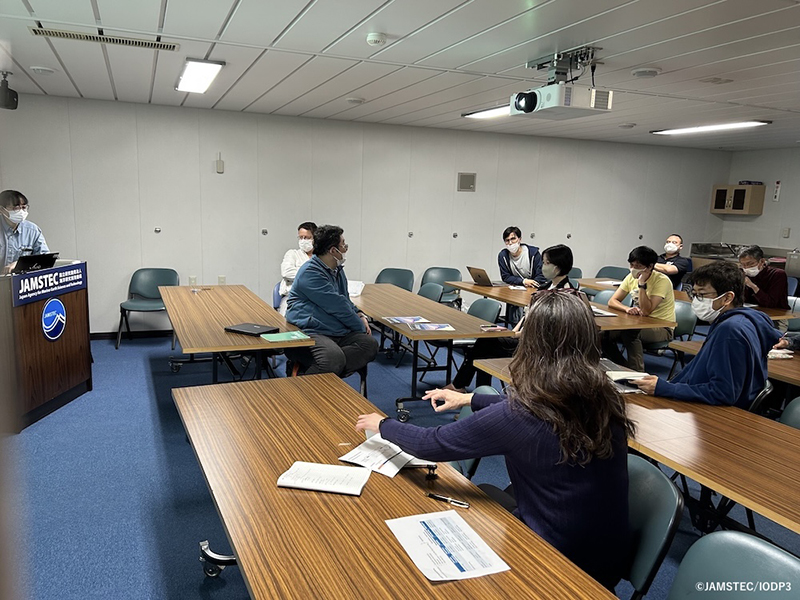
The ship is rocking from the strong winds and swell today, so work will begin at 2100 hrs when the weather calms down. Scientists had team leaders' meetings mainly discussing report writing.
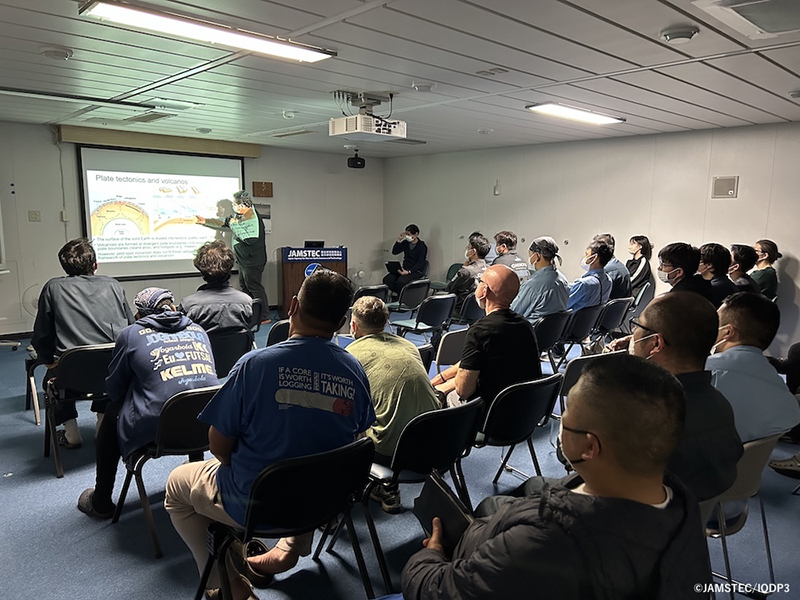
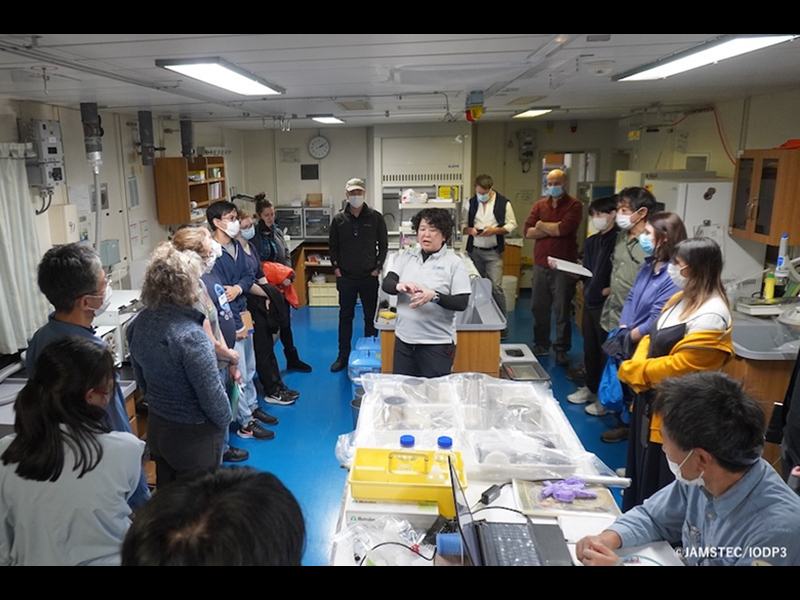
Co-chief Asuka Yamaguchi give a presentation on the IODP3 Exp.502 scientific objectives to the crew at the pre-spud meeting. The EPM led a lab safety tour for the onboard Scientists.
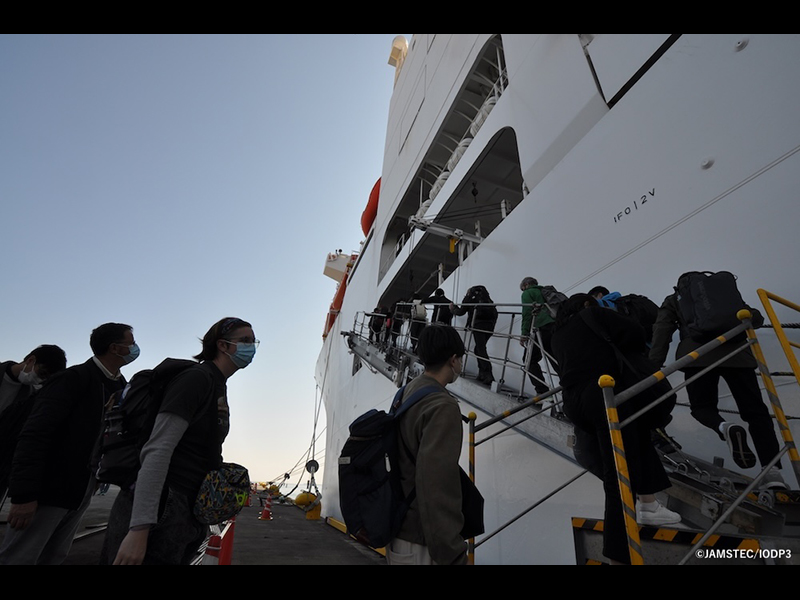
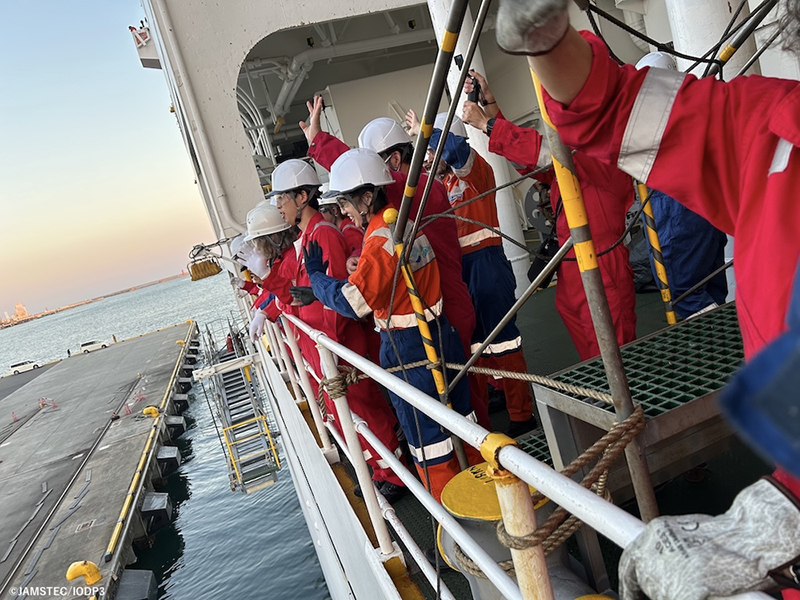
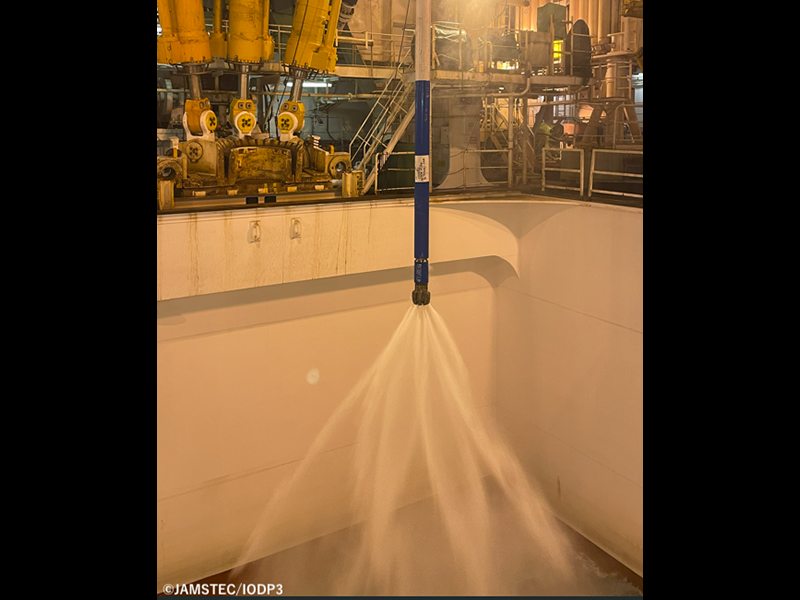
IODP3 Expedition 502 now starts! Chikyu left the quay of Sendai port on time & the scientists departed with a warm send-off. On the drilling floor, testing & checking of mud motors & wireline logging equipment goes on as the crew prepare for drilling.
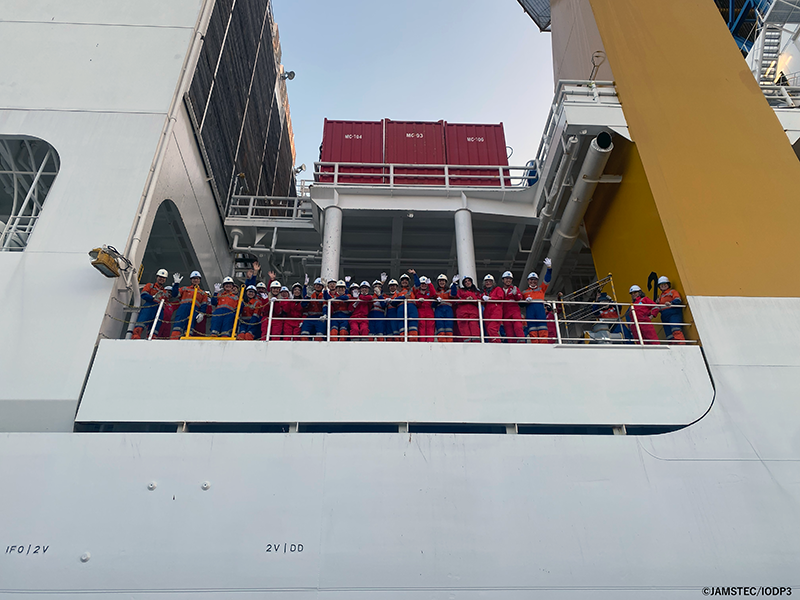
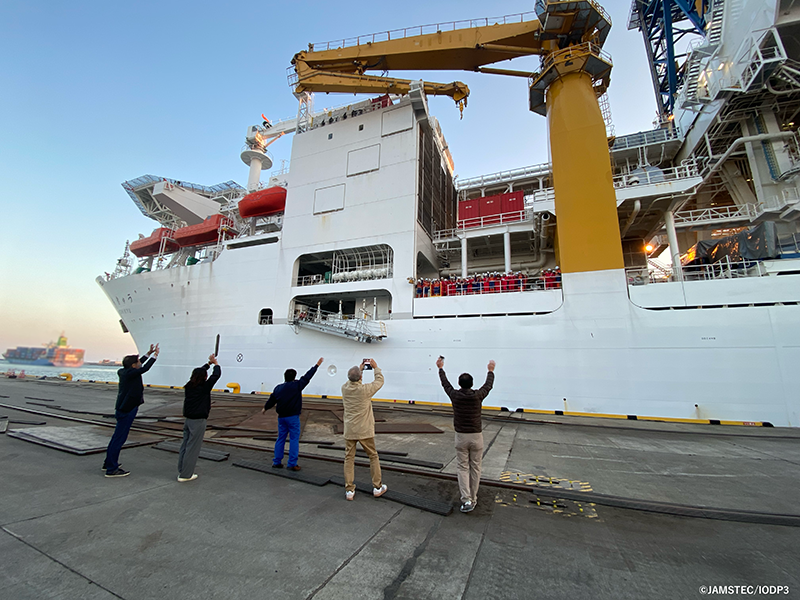
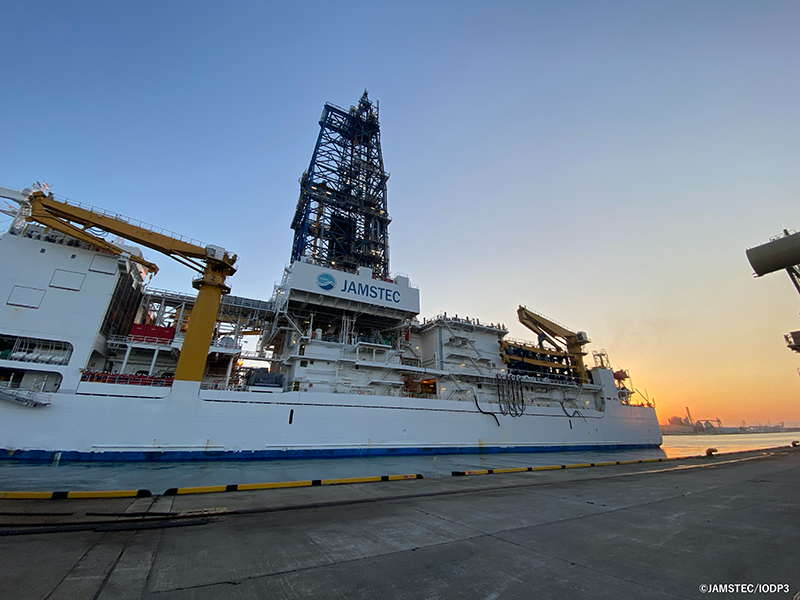
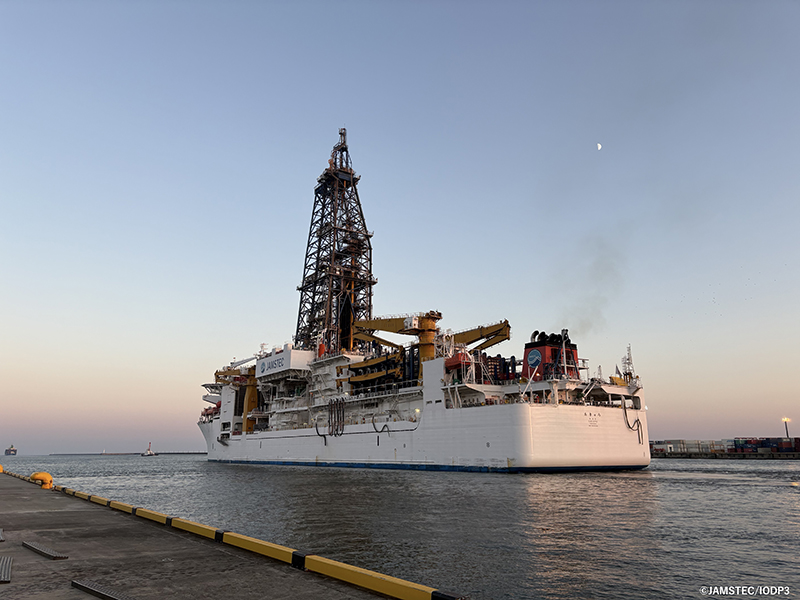
Chikyu departed from Sendai Port at 16:15 as scheduled. IODP3 Expedition 502 plans to explore the nature of the acoustic basement in the outer rise area of the NW Pacific subduction system.