The Kochi Institute for Core Sample Research, part of the Japan Agency for Marine-Earth Science and Technology (JAMSTEC), was established in October 2005 as a one-of-a-kind institute worldwide to conduct end-to-end curation and management of geological core samples recovered from the ocean floor by drilling vessels, including the deep-sea drilling vessel Chikyu, as well as cutting-edge research using those samples. In 2007, the institute became one of the three official core repositories of the Integrated Ocean Drilling Program (IODP, at the time) and has since been responsible for curating cores collected from the Indian Ocean and the western Pacific Ocean. Currently, the cumulative length of cores stored at the institute exceeds 147 km. These invaluable scientific resources are made available to researchers worldwide through the institute’s curation services.
Core samples recovered by scientific ocean drilling preserve crucial records of Earth’s history—from past-to-present climate change and biological activity to tectonic deformation. These cores are a shared scientific heritage for humankind: in response to requests from researchers worldwide, they are distributed and have enabled numerous discoveries not only in Earth science but also in diverse fields such as life science. At the Kochi Institute, in close collaboration with domestic and international scientific communities, we pursue world-leading research on earthquake faults, the ocean–deep biosphere, and Earth’s material cycles and environmental change, together with the technology development that underpins these studies. We are also committed to contributing to society by communicating our research outcomes and to training the next generation of scientists and engineers.
These activities are carried out at the Kochi Core Center (KCC), a facility jointly operated by Kochi University and JAMSTEC. In addition to serving as a hub for core-based research, the KCC plays an important educational role by fostering the next generation of scientists and engineers. This is achieved through training programs such as the “Core School,” as well as through collaborative activities conducted in partnership with Kochi University. Through the operation of advanced analytical instruments and core-repository facilities, the KCC has developed into a central hub for scientific ocean drilling in both name and practice. We will continue to strengthen the KCC so that it remains an attractive place where researchers from Japan and abroad gather, connect, and exchange ideas.
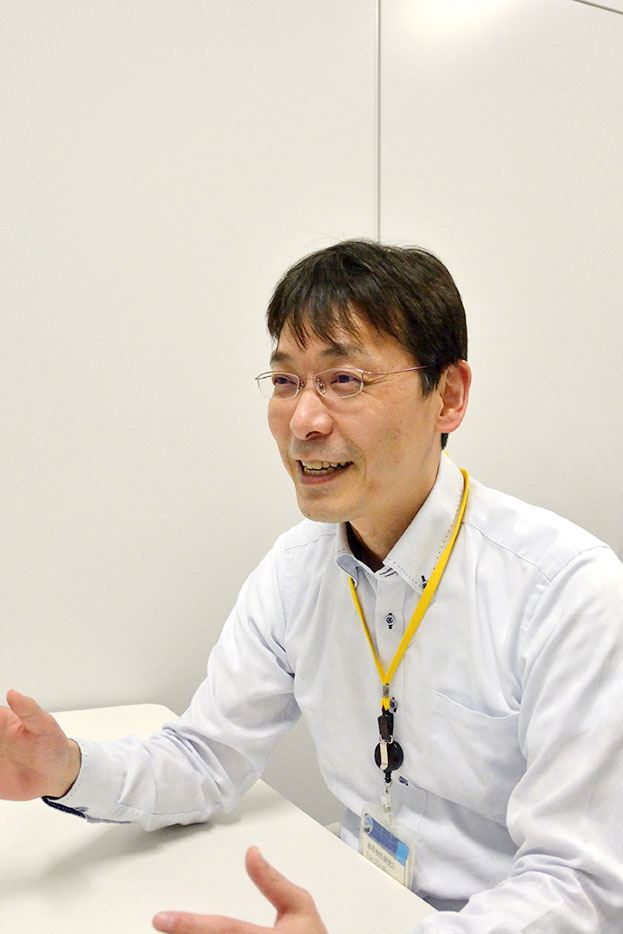
Dr. Takehiro Hirose
Director Kochi Institute for Core Sample Research