UNIT2: Research Unit for
Marine Environmental Changes Monitoring
We elucidated the impacts of the earthquake, tsunamis, and restoration processes by conducting long-term monitoring of marine environments from the sea surface to the seafloor.
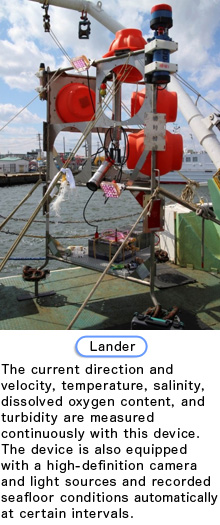
The marine environment has changed significantly due to the inflow of soil and sand from coastal areas, submarine slope failures, and the suspension of sediments on the seafloor caused by earthquake and tsunamis. We aim to elucidate how the earthquake and tsunamis affected the marine environment and how it will be restored.
In order to achieve that objective, it is essential to investigate continuously the physical, chemical, and biological marine environments from sea surface to seafloor sediments. Although this data may not directly and immediately be helpful for fishermen activity, it is essential to acquire basic data on marine environments to discuss future fisheries management strategies. Nothing would make us happier than knowing that our investigation led to the revitalization of the fisheries and that the individuals involved in fisheries found our work useful.
We represented the health of the ocean by measuring chemical substances in organisms.
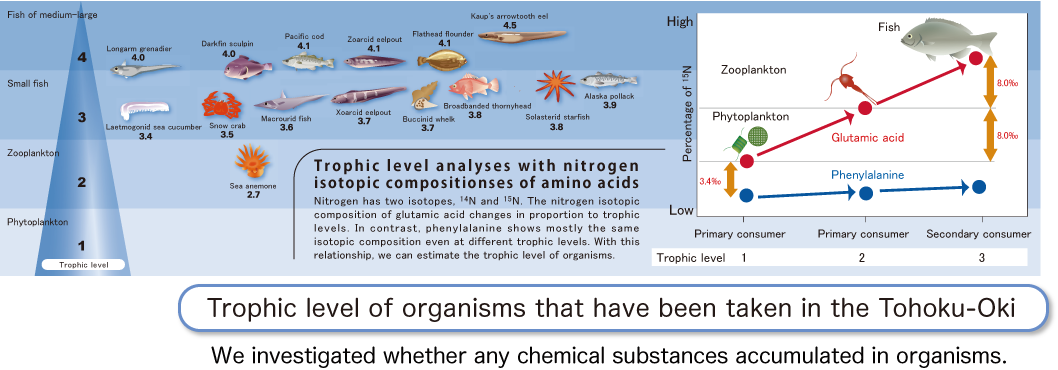
The tsunamis carried various objects from the land to the sea. Some of the objects contained the toxic substance PCBs (polychlorinated biphenyls). We aimed to elucidate the health of the ocean by measuring the level of PCBs contained in organisms and the sediments. Furthermore, we estimate trophic levels together with PCB analysis. Organisms at higher trophic levels play an important role in providing an overall picture of ecosystems. In other words, organisms at higher trophic levels tend to have increased longevity and serve as a useful monitor for understanding the levels of sea pollution via food chains. Therefore, it is very important to investigate trophic levels in addition to PCB concentration levels. Although PCB concentrations in sediments and organisms are currently below the reference values, we will continue to monitor the levels in the future.