

Equipment development
The equipment used in conventional deep-sea research is too large for exploring deep-sea caves. Therefore, the D-ARK project is developing new exploration equipment specifically designed for deep-sea cave surveys.
Small Remotely Operated Vehicle(Mini-ROV)
Mission
- ・Explore the interiors of deep-sea caves and record them in 4K video
- ・Collect organisms living inside deep-sea caves and obtain environmental data
Features
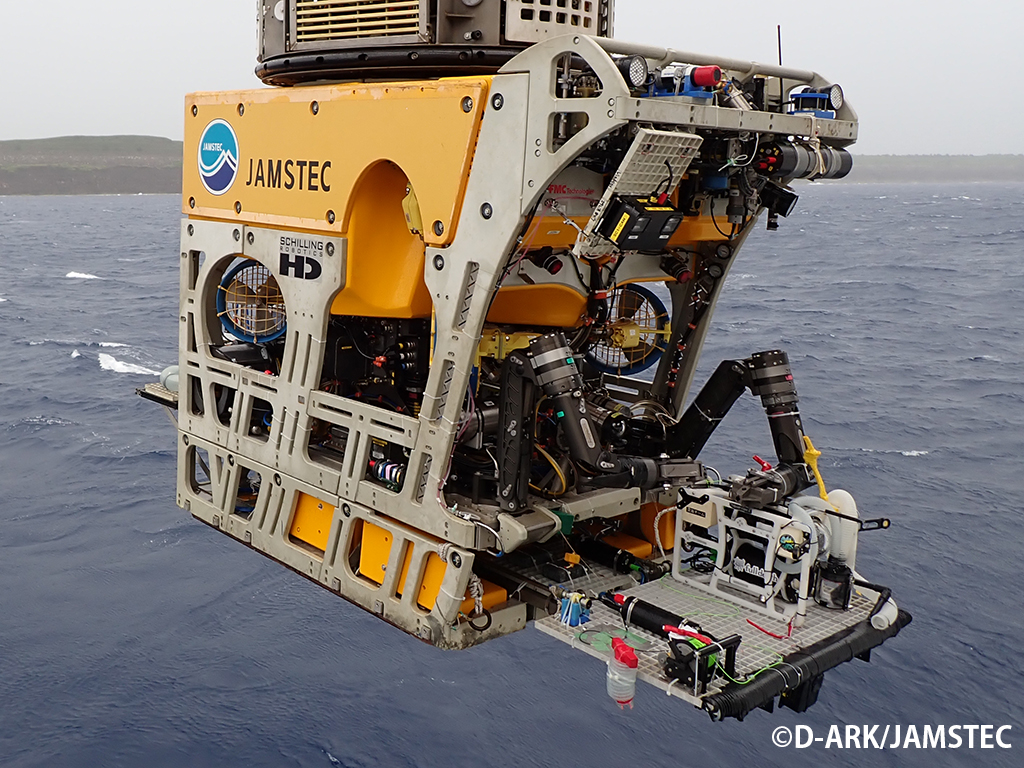
The Mini-ROV is carried by KM-ROV, a remotely operated vehicle about the size of a car. When KM-ROV finds a deep-sea cave, the Mini-ROV is deployed from KM-ROV to explore the cave interior.
Video captured by the Mini-ROV can be viewed in real time on board the research vessel.
The Mini-ROV is also equipped with a slurp gun (an underwater vacuum), which can collect organisms living inside the cave by suction.
In previous surveys, we used a modified existing vehicle, TripodFinder2, as the Mini-ROV. We are now developing a new vehicle called DroSea.
Specifications: TripodFinder2
| Size | 600x424x400 mm |
| Weight in air | 25.0 kg |
| Maximum speed | Forward: 2.5 knots, reverse: 1.5 knots |
| Maximum operating depth | 1,000 m |
| Operating time | About 2 hours |
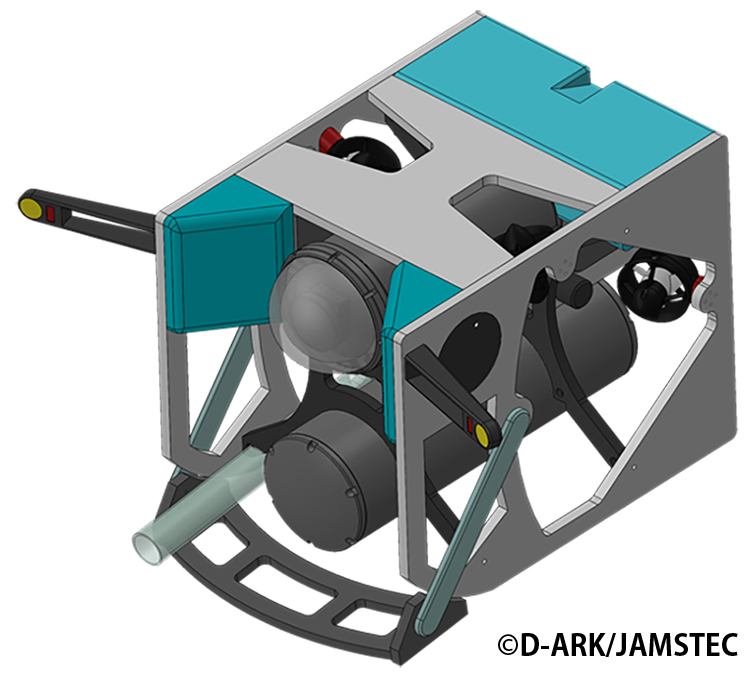
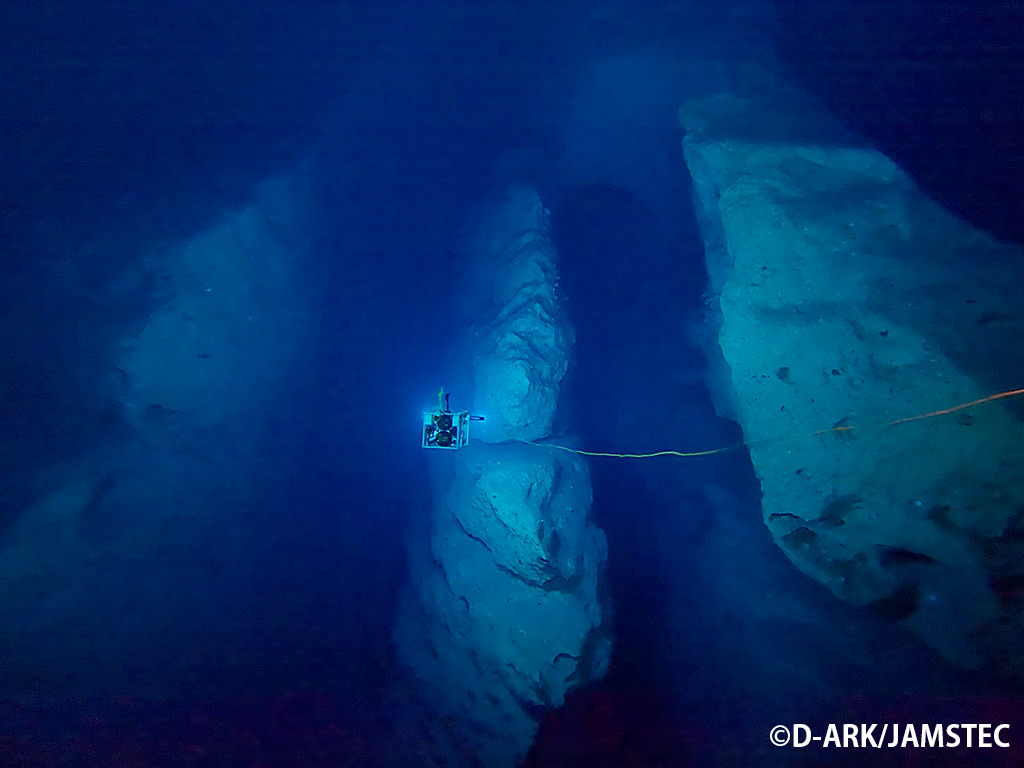 TripodFinder2 exploring the deep-sea cave “Labyrinth”
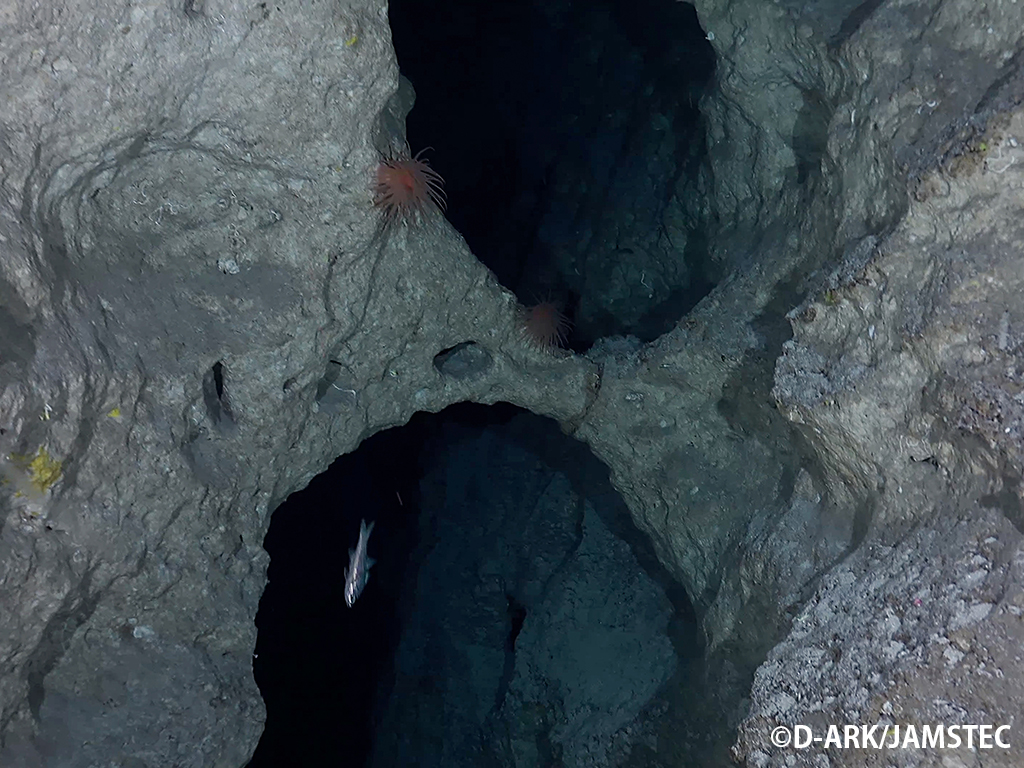 Interior of the deep-sea cave “Labyrinth,” filmed by TripodFinder2
Deep-Sea Endoscope “Xscope”
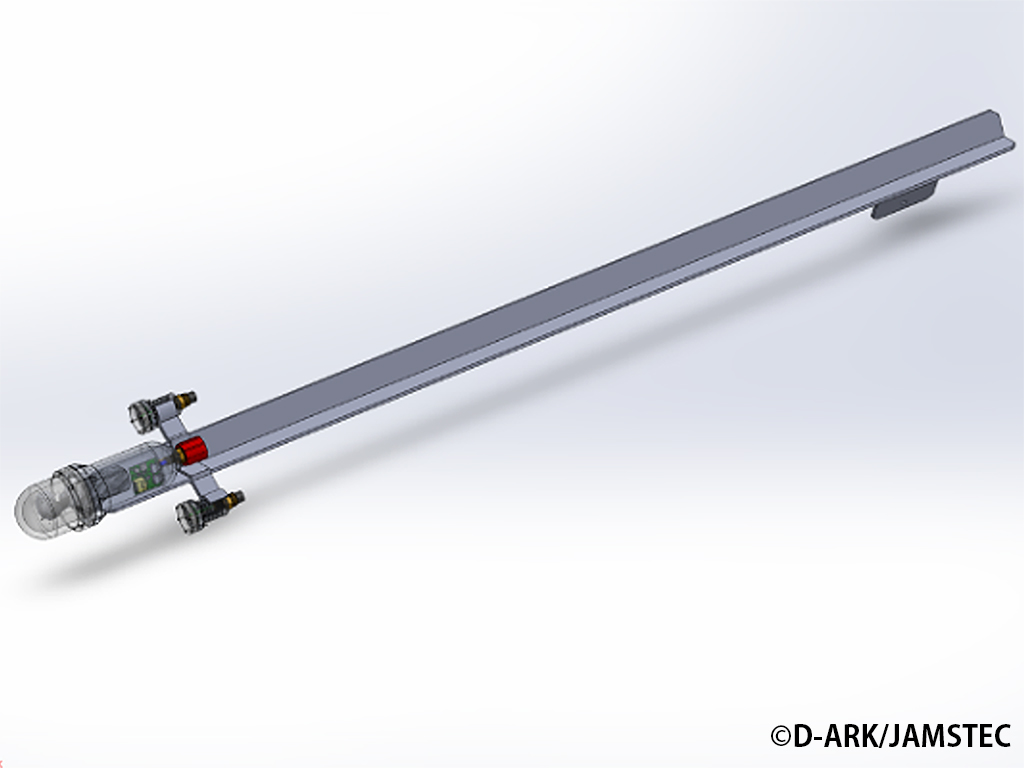
Mission
- ・Explore small holes and crevices in rocky areas and record video of their interiors
- ・Collect environmental DNA (eDNA) samples from inside holes and crevices
Features
Xscope is operated using the manipulator arm of KM-ROV. A camera mounted at the tip of Xscope is used to film the interiors of small holes and crevices.
The camera is housed in a clear acrylic dome and mounted on a gimbal, allowing it to move freely in all directions. This enables the interior to be observed from multiple angles.
Xscope can also pump seawater through an intake at its tip to collect environmental DNA (eDNA) samples, making it possible to detect organisms that cannot be seen directly.
Specifications
| Length | About 1,000 mm |
| Weight in air | About 17 kg |
| Maximum operating depth | 1,000 m |
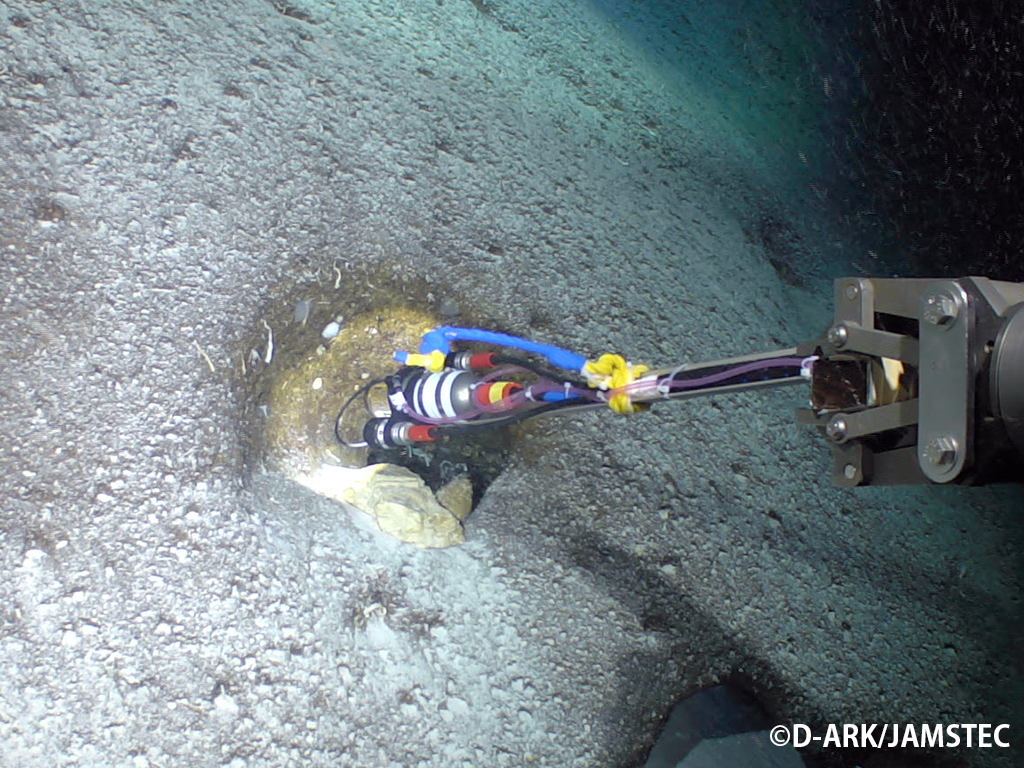 Xscope being used to explore a small hole
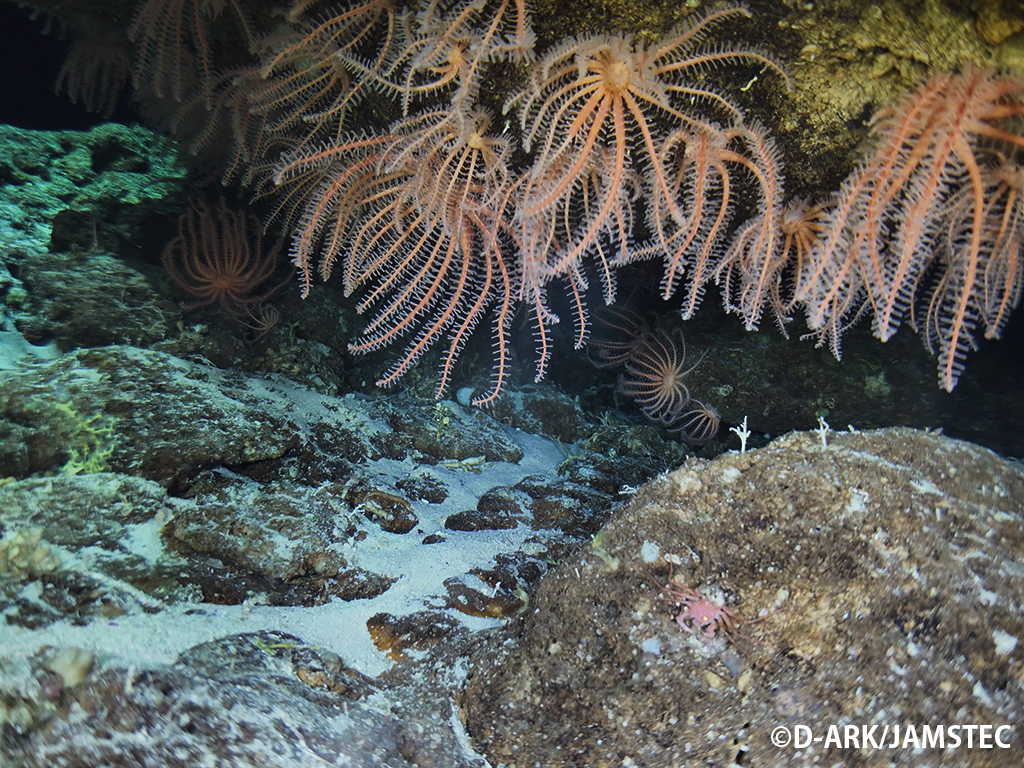 Seafloor view captured by Xscope
Deep-Sea Cave Monitoring Camera “CaveCam”
Mission
Record long-duration video inside caves both day and night
Features
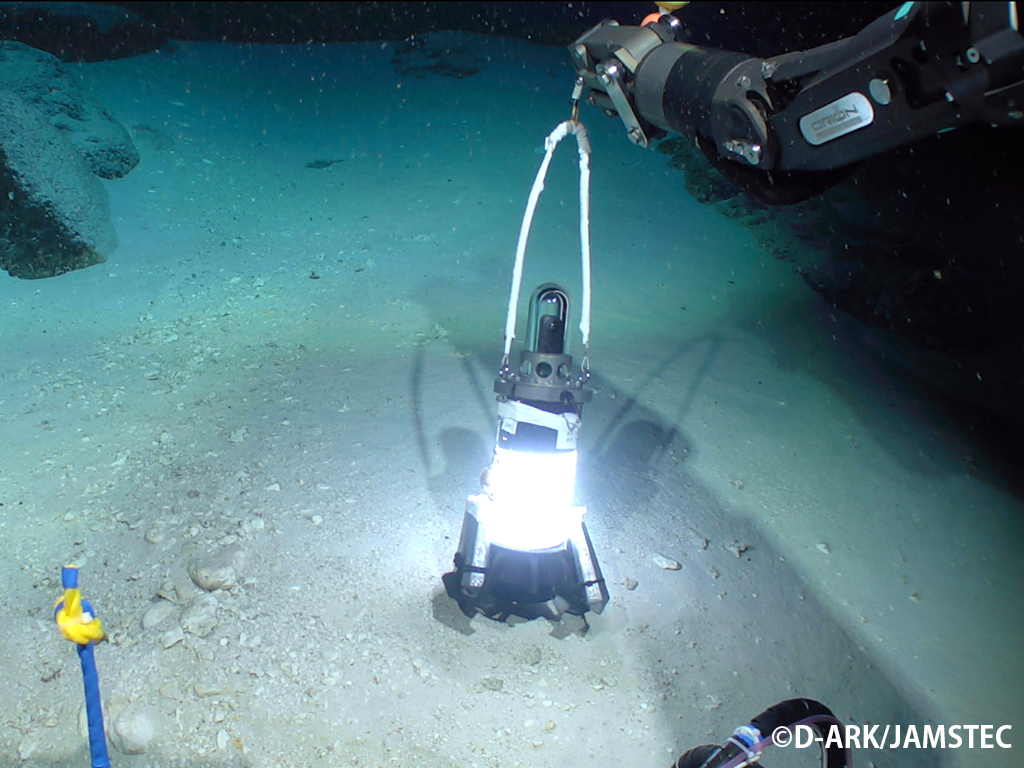
CaveCam is a 360-degree camera designed for long-duration recording on the seafloor.
It is used mainly to record deep-sea caves at night, documenting cave interiors when direct observation is not possible.
During the previous survey, we were unable to deploy CaveCam inside a cave. However, we conducted a seafloor deployment test at another site and confirmed that it could record for an extended period.
Specifications
| Size | φ300x600 mm (including the frame) |
| Weight in air | About 8 kg |
| Maximum operating depth | 1,000 m |
| Operating time | About 12 hours |
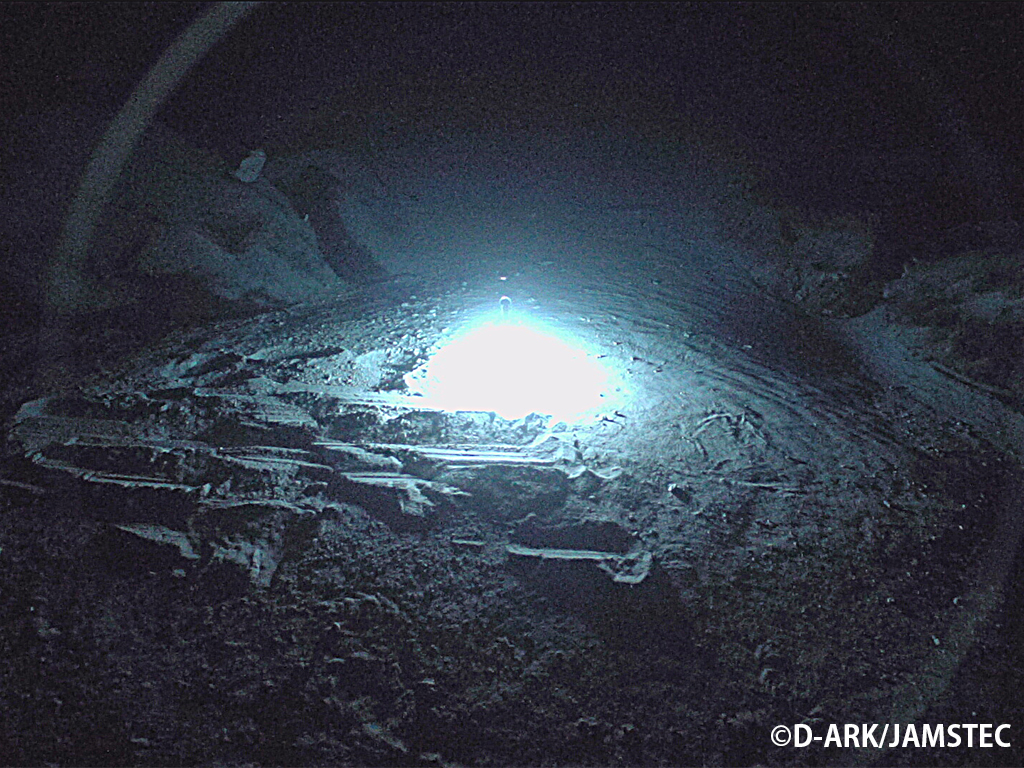 CaveCam deployed on the seafloor
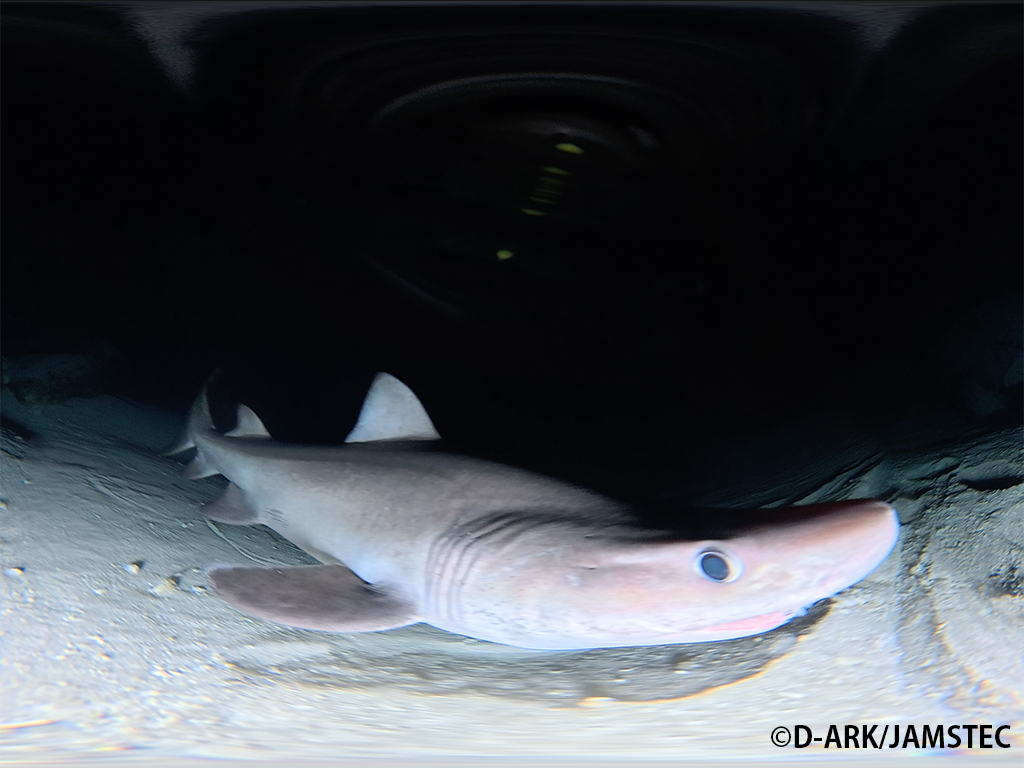 A smalltooth sand tiger filmed by CaveCam